Commercial Wood Flooring in Los Angeles

Commercial wood flooring gives offices, retail stores, restaurants, hotels, salons, showrooms, and other business spaces a professional, polished appearance, creating a welcoming environment with a durable surface for daily foot traffic, furniture, equipment, and routine cleaning.

Complete Commercial Wood Flooring Services

Planned Around Your Business, Traffic, and Schedule

Our commercial wood flooring services include new installation, engineered hardwood, floor replacement, repair, refinishing, staining, subfloor preparation, transitions, and custom decorative flooring. Each project is planned around the type of business, traffic level, existing floor conditions, design goals, and installation schedule.

Whether you are renovating a small office or updating a larger commercial property, careful material selection and installation help create flooring that looks professional and performs well in a busy environment.

  • Offices, retail, restaurants, hotels, and showrooms
  • Commercial-grade engineered and solid hardwood
  • Phased installation to reduce business disruption
  • Refinishing, repairs, and screen-and-recoat maintenance
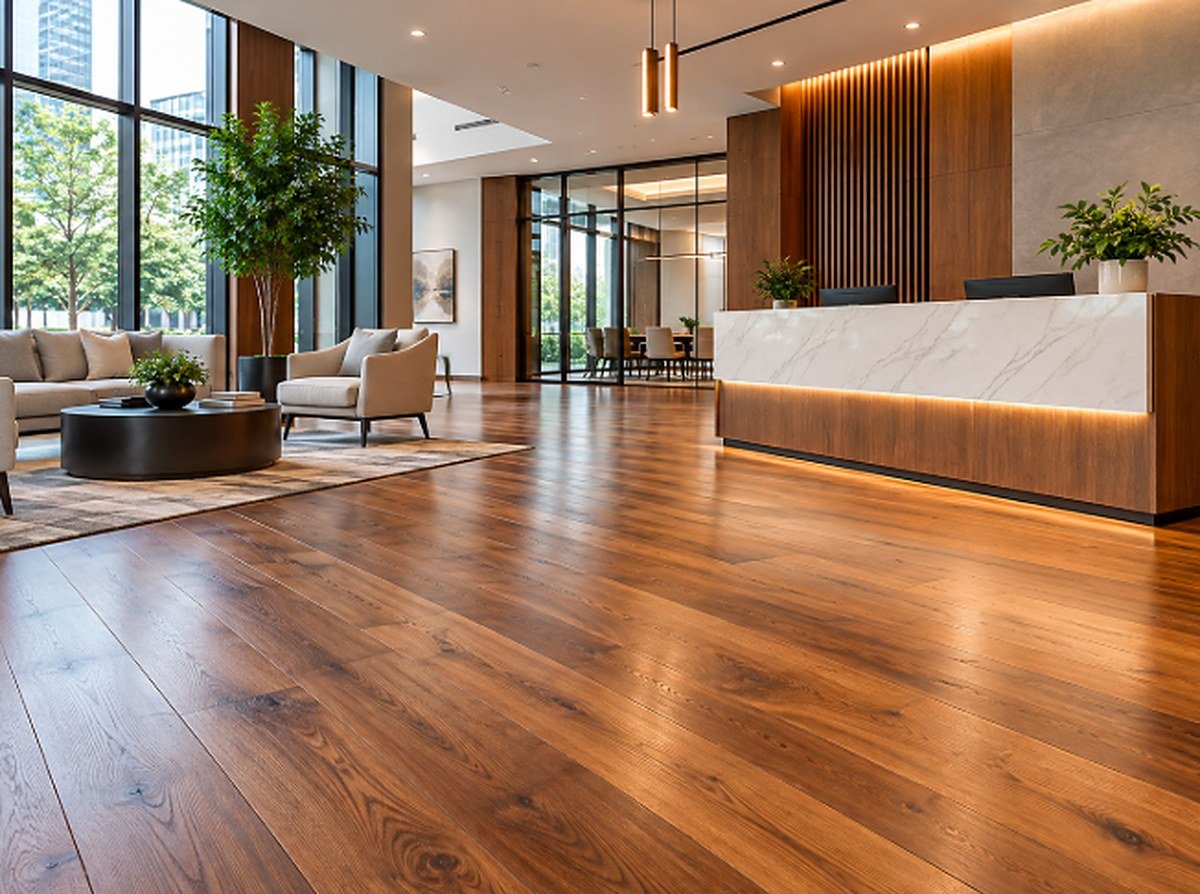
Modern office reception and lobby with wide plank hardwood flooring

Wood Flooring for Every Type of Business

Offices, Retail, Restaurants, Hotels, Showrooms, and More

01

Office Hardwood Flooring

Hardwood creates a clean, professional look in offices of every size, including:

  • Reception areas
  • Private offices
  • Conference rooms
  • Hallways
  • Executive suites
  • Waiting areas
  • Break rooms
  • Common spaces

Lighter floors feel more open; medium and darker tones feel more formal.

02

Retail Store Wood Flooring

Wood creates an upscale shopping environment coordinated with displays, shelving, branding, lighting, and merchandise.

Wide plank, natural oak, dark hardwood, and engineered wood are common, with finishes chosen for traffic and cleaning requirements.

03

Restaurant Wood Flooring

Wood adds warmth and character to dining areas, waiting spaces, bars, and private dining rooms.

With heavy traffic, chair movement, spills, and frequent cleaning, material and finish selection are important, and engineered wood may suit some spaces.

04

Hotel Hardwood Flooring

Wood flooring works throughout hotels:

  • Lobbies
  • Guest rooms
  • Hallways
  • Suites
  • Lounges
  • Restaurants
  • Reception
  • Meeting rooms

Projects often run in phases to reduce disruption, with durable, easy-care finishes.

05

Showroom Flooring

Showroom floors should enhance products without competing with them. Natural hardwood creates a high-quality background for automotive, furniture, design, and fashion showrooms.

Wide plank oak and neutral finishes are popular, with decorative patterns in premium display areas.

06

Salon Wood Flooring

Salons and beauty studios use hardwood or engineered wood for a warm, stylish interior that handles chair movement, traffic, and cleaning.

Product selection considers moisture, chemicals, and equipment, and protective mats can be used in busy work areas.

07

Boutique Wood Flooring

Boutiques use flooring as part of the customer experience, with white oak, herringbone, chevron, dark walnut, or custom stains.

The floor can be coordinated with display fixtures, wall finishes, lighting, and branding.

08

Wood Flooring for Hospitality Spaces

Restaurants, lounges, hotels, clubs, and event spaces use wood flooring to create atmosphere for rustic, modern, traditional, industrial, or luxury designs.

Durability, maintenance, and traffic are considered alongside appearance.

09

Commercial Flooring Renovations

Wood flooring is often part of a larger renovation involving new walls, cabinetry, reception desks, lighting, or layouts.

Coordinating the floor with the overall renovation helps avoid unnecessary transitions and height problems.

Professional & Creative Spaces

Medical, Law, and Real Estate Offices, Studios, and Galleries

01

Wood Flooring for Medical Offices

Real engineered wood or wood-look flooring may suit public and administrative areas, selected for cleaning, traffic, and use. Not every clinical environment is appropriate for real wood.

02

Wood Flooring for Law Offices

Hardwood creates a traditional or professional atmosphere. Medium brown oak, walnut, dark finishes, and classic plank layouts are common, while white oak feels more contemporary.

03

Wood Flooring for Real Estate Offices

Real estate offices, design studios, and client-facing spaces use hardwood for an inviting, polished interior, with consistent open-office floors and patterns in meeting rooms.

04

Wood Flooring for Studios & Galleries

Studios and creative spaces value wood's warmth and versatility, with matte finishes that limit reflection. Galleries use natural oak and light tones as an elegant background for art.

Key Commercial Spaces

Reception Areas, Conference Rooms, Executive Offices, Hallways, and Lobbies

Reception Area Flooring

The reception area creates a visitor's first impression. Natural white oak, walnut, wide plank, herringbone, and borders feel polished, chosen for traffic and furniture movement.

Conference Room Hardwood Flooring

Hardwood creates a formal, refined look that pairs with tables, built-ins, and acoustic wall treatments, with area rugs for sound control and comfort.

Executive Office Flooring

Executive offices often use walnut, wide plank white oak, or custom patterns coordinated with desks, wall panels, cabinetry, and premium finishes.

Commercial Hallway Flooring

Hallways see concentrated traffic and need durable finishes and regular maintenance. Long plank layouts emphasize the direction of the corridor.

Lobby Wood Flooring

Large, highly visible lobbies suit wide plank oak, herringbone, chevron, and borders, laid out around entrances, reception desks, elevators, and focal points.

Commercial Flooring Materials

Engineered, Solid, and Wide Plank Hardwood

01

Commercial Engineered Hardwood

Engineered hardwood is popular for its layered construction and installation flexibility over concrete or plywood, glued down or floated. Styles include:

  • White oak
  • Walnut
  • Wide plank
  • Wire-brushed
  • Natural finishes
  • Dark stains
  • Matte finishes

The product is chosen for the expected traffic and application.

02

Commercial Solid Hardwood Flooring

Solid hardwood suits commercial spaces with the right environment and subfloor, offering traditional construction and long-term refinishing potential.

Common species include oak, maple, hickory, and walnut. Subfloor, moisture, and installation method are evaluated first.

03

Commercial Wide Plank Flooring

Wide plank flooring creates a modern, upscale look in offices, restaurants, hotels, showrooms, boutiques, and high-end retail.

White oak is especially popular, and engineered construction is useful in larger areas thanks to its dimensional stability.

Decorative Commercial Flooring

Herringbone, Chevron, Parquet, and Custom Designs

Commercial Herringbone Flooring

Herringbone creates a distinctive, premium look in customer-facing spaces:

  • Hotel lobbies
  • Restaurants
  • Boutiques
  • Reception areas
  • Showrooms
  • Executive offices

The pattern requires precise layout and a flat installation surface.

Commercial Chevron Flooring

Chevron's strong V-shaped pattern works well in contemporary commercial interiors, throughout a room or as a feature section.

It's especially effective in entrances, lobbies, and hospitality spaces where a memorable first impression matters.

Commercial Parquet Flooring

Parquet adds architectural character to restaurants, hotels, offices, galleries, and boutique retail.

The pattern and wood species can be customized to suit the design of the property.

Custom Commercial Flooring Design

Flooring can support the design identity of your property, used selectively in high-visibility areas:

  • Borders
  • Herringbone
  • Chevron
  • Parquet
  • Multiple species
  • Custom stains
  • Feature floors
  • Decorative entries

Commercial Floor Services

Replacement, Repair, Refinishing, Recoating, Staining, and Maintenance

01

Commercial Floor Replacement

When floors are worn, damaged, outdated, or hard to maintain, replacement may include:

  • Removing flooring
  • Removing adhesive
  • Subfloor inspection
  • Repairs
  • Leveling
  • Moisture testing
  • New wood installation
  • Transitions and trim

Projects can be staged to reduce disruption.

02

Commercial Wood Floor Repair

Localized damage doesn't always need full replacement. Repairs may address:

  • Scratched boards
  • Deep gouges
  • Loose flooring
  • Water damage
  • Cracks
  • Worn sections
  • Damaged transitions
  • Board replacement
03

Commercial Hardwood Refinishing

When the wood is still in good condition, refinishing removes surface wear, scratches, old finish, and discoloration.

Sanding, staining, and a new protective finish update an older floor without replacing it.

04

Commercial Screen and Recoat

For light surface wear, the existing finish is lightly abraded and a compatible new coat applied, refreshing appearance and adding protection.

Regular recoating can help delay the need for full refinishing.

05

Commercial Hardwood Staining

Floors can be stained to match your interior design or branding:

  • Natural oak
  • Light neutral
  • Medium brown
  • Walnut
  • Espresso
  • Gray
  • Custom colors

Samples are tested on the actual floor first.

06

Commercial Wood Flooring Maintenance

Regular maintenance preserves the floor's appearance. Typical care may include:

  • Routine dust removal
  • Approved cleaning
  • Entry mats
  • Furniture protection
  • Prompt spill cleanup
  • Periodic inspection
  • Screen-and-recoat

Recommendations depend on the flooring and finish.

Built for Business Traffic

Durability, Preparation, Sound Control, and Scheduling

01

High-Traffic Commercial Flooring

Commercial floors see far more traffic than homes. Important considerations include:

  • Wood hardness
  • Wear layer thickness
  • Finish durability
  • Cleaning procedures
  • Furniture movement
  • Entry matting
  • Maintenance schedule
02

Commercial Flooring With Rolling Furniture

Offices, salons, and businesses with rolling chairs or equipment benefit from protective mats, proper casters, and durable finishes.

The floor is evaluated for the type of movement expected in the space.

03

Commercial Flooring Over Concrete

Many commercial properties have concrete slabs. Engineered hardwood can be glued down or floated over properly prepared concrete, evaluated for:

  • Moisture
  • Flatness
  • Cracks
  • Adhesive residue
  • Surface contamination
04

Commercial Floor Leveling

Large spaces often reveal dips, high areas, or uneven sections that need leveling before installation.

The method depends on whether the base is concrete, plywood, or another material. See floor preparation.

05

Commercial Moisture Testing

Concrete slabs and wood subfloors may contain moisture that affects the floor after installation.

Testing determines whether moisture-control products or additional drying time are required.

06

Acoustic Underlayment

Offices, hotels, and multi-level buildings may require sound-control systems. Acoustic underlayment can help reduce impact noise depending on the assembly.

Building requirements are reviewed before selecting flooring and underlayment.

07

Commercial Floor Transitions

Commercial properties often combine several materials, needing transitions between wood and tile, carpet, stone, concrete, or vinyl.

Durable transition pieces protect edges and create safer, cleaner connections.

08

Phased Commercial Installation

Businesses that can't close entirely can have work divided into phases so certain areas stay accessible.

Phased work is planned around transitions, furniture movement, curing times, and access routes.

09

Commercial Flooring Scheduling

Installation can be scheduled around your business hours, traffic flow, and drying or curing time.

Clear timelines and communication help keep your business running smoothly during the project.

Choosing Commercial Wood Flooring

The best commercial flooring should be selected based on more than appearance. Important factors include:

  • Expected traffic
  • Type of business
  • Subfloor
  • Moisture
  • Cleaning requirements
  • Design style
  • Maintenance expectations
  • Installation method
  • Project schedule
  • Budget

Comparing these factors helps identify a flooring system that fits the property.

Commercial Wood Flooring Installation Process

A typical commercial project may include the following steps. The exact process depends on the property and flooring system.

  1. 01Measuring the property
  2. 02Reviewing traffic and business requirements
  3. 03Inspecting existing flooring
  4. 04Checking the subfloor
  5. 05Testing moisture
  6. 06Removing old flooring
  7. 07Preparing and leveling the base
  8. 08Planning the layout
  9. 09Installing the wood flooring
  10. 10Completing transitions and trim
  11. 11Applying site finishes when required
  12. 12Final inspection and cleanup

Commercial Wood Flooring FAQs

Answers to Common Business Flooring Questions

1.

Can you install flooring without closing my business?

In many cases, yes. We can divide the project into phases so parts of your business stay open while other areas are completed, and schedule work around your hours, including evenings or weekends when possible. Phased projects are planned carefully around furniture moves, access routes, transitions, and drying or curing times to keep disruption to your customers and staff to a minimum.

2.

Is hardwood durable enough for high-traffic commercial spaces?

Yes, when the right product and finish are chosen. Harder species, engineered hardwood with a thick wear layer, and durable commercial finishes hold up well in offices, retail, and hospitality spaces. Entry mats, furniture pads, proper chair casters, and a routine maintenance plan, including periodic screen-and-recoat, help commercial wood floors look great for years.

3.

What wood flooring works best over concrete in commercial buildings?

Engineered hardwood is usually the best choice for concrete slabs, which are common in Los Angeles commercial properties. We test the slab for moisture, check flatness, grind or level as needed, and then glue the flooring down or float it over an approved underlayment. Buildings with multiple levels may also require acoustic underlayment to meet sound-control requirements.

4.

How do you maintain commercial hardwood floors?

Routine dust removal, manufacturer-approved cleaners, entry mats, and furniture protection handle day-to-day care. Spills should be cleaned promptly. Periodically, a screen-and-recoat refreshes the protective finish before wear reaches the wood, which can delay the need for full refinishing. We recommend a maintenance schedule based on your traffic level, flooring product, and finish.

5.

Can you match flooring to our brand or interior design?

Yes. We offer custom stain colors, plank widths, and patterns like herringbone, chevron, parquet, and borders to support your brand identity. Samples are tested on the actual flooring so the color works under your lighting. Decorative details can be used selectively in lobbies, reception areas, and other high-visibility spaces for maximum impact within your budget.

Upgrade Your Commercial Property With Wood Flooring

Professional, Durable, and Built Around Your Business

Commercial wood flooring can provide a professional, durable, and attractive foundation for many types of businesses. From offices and boutiques to restaurants, hotels, showrooms, and salons, hardwood and engineered wood can be customized to match the design and practical needs of the property.

Whether your project involves new installation, replacement, refinishing, repairs, or a custom decorative floor, careful planning can help create a finished result that works with both the space and the way your business operates.

Contact us to discuss commercial wood flooring materials, installation methods, custom designs, scheduling, and an estimate for your project.

Book Service

Get a Free Estimate for Your Wood Flooring Project