Wood Floor Repair in Los Angeles

Wood floors are built to last, but everyday wear, moisture, impact damage, pets, shifting subfloors, and aging materials can eventually create visible problems. Scratches, cracked boards, gaps, squeaks, cupping, buckling, and water damage can affect both the appearance and performance of the floor.

Hardwood Floor Repair Services

Restore Damaged Areas Without Replacing the Whole Floor

Our wood floor repair services are designed to restore damaged areas whenever replacement of the entire floor is not necessary. Repairs may involve replacing individual boards, correcting loose sections, addressing moisture-related movement, fixing subfloor issues, or blending repaired areas with the surrounding hardwood.

A proper repair begins with identifying the cause of the damage. Fixing only the visible surface without correcting the underlying problem can lead to repeat issues.

Hardwood floor repair can address a wide range of problems in both solid and engineered wood flooring. The repair method depends on the wood species, installation system, floor condition, finish, and cause of the problem. Whenever possible, we work to preserve the existing flooring and repair only the affected areas.

  • Find and fix the cause, not just the surface
  • Individual board replacement
  • Stain and finish matching
  • Subfloor and moisture problem repair
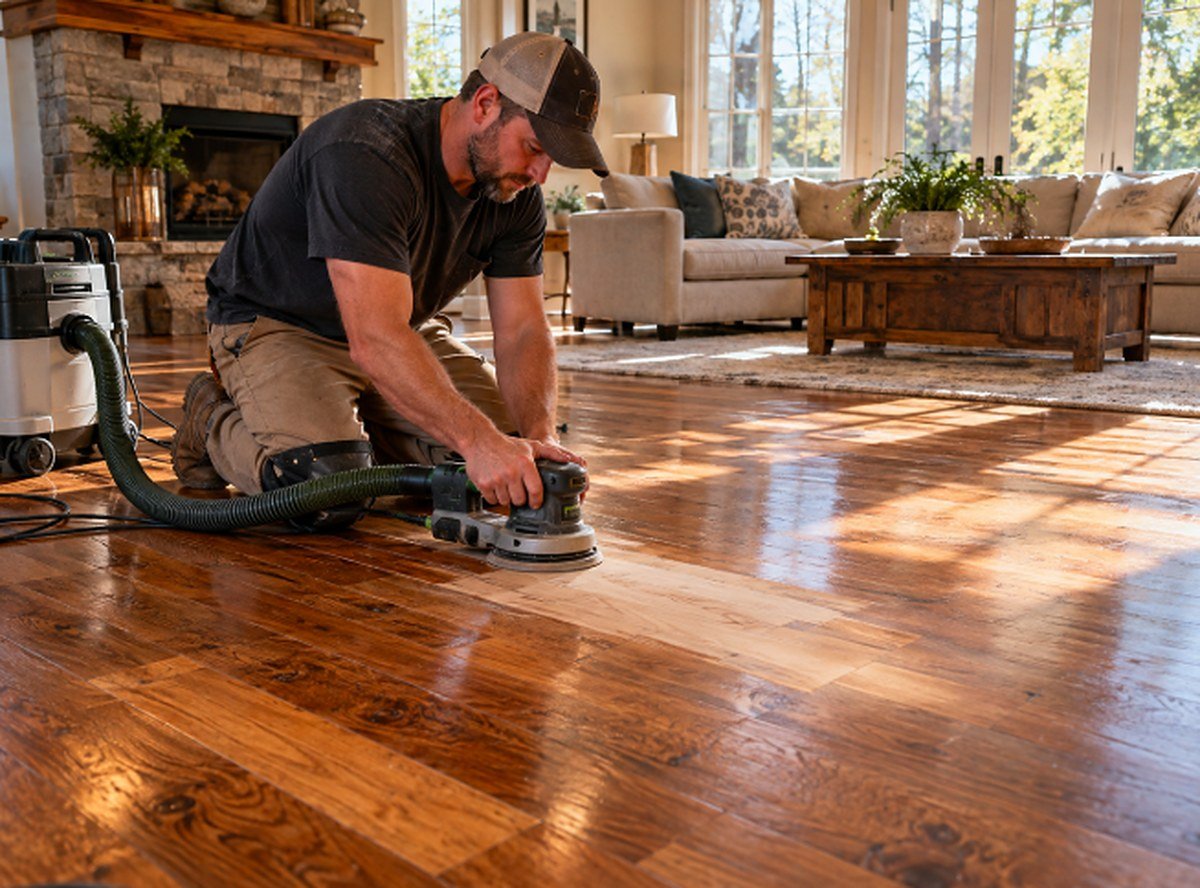
Technician sanding a repaired section of hardwood floor to blend it with the surrounding finish

Surface Damage Repair

Scratches, Gouges, Dents, Burns, Stains, and Worn Finishes

01

Scratched Wood Floor Repair

Scratches are one of the most common hardwood problems. Light scratches may affect only the finish, while deeper ones penetrate the wood.

Options include touch-up products, localized sanding, refinishing, or replacing the board, depending on depth, finish, and how well the area can be blended.

02

Deep Gouge Repair

Furniture, heavy objects, tools, moving equipment, or sharp impacts can leave deep gouges.

Small gouges may be repaired with wood filler or localized restoration; larger damage may require replacing the board, matching grain, species, stain, and finish.

03

Hardwood Floor Dent Repair

Dents occur when heavy furniture, appliances, or objects compress the wood fibers.

Some minor dents may improve with restoration methods depending on finish and species, while deep dents affecting the board's structure may require sanding or replacement.

04

Burn Damage Repair

Burns from hot objects, fireplaces, cigarettes, or other heat sources can permanently damage wood and finish.

Small surface marks may be sanded or refinished, while deeper burns typically require board replacement blended with the surrounding floor.

05

Pet Damage Repair

Pets can leave scratches, stains, gouges, and moisture damage. Light scratches may improve through surface repair or refinishing.

Deeper damage may require board replacement, and pet urine can penetrate deeply, so replacing affected boards often gives a cleaner result.

06

Discolored Wood Floor Repair

Floors can discolor from sunlight, rugs, furniture, moisture, chemicals, or aging finishes. Localized discoloration can sometimes be improved by sanding and refinishing.

Because wood changes color over time, refinishing a larger section or the entire room may create a more consistent appearance.

07

Stained Hardwood Repair

Dark stains, water marks, and chemical stains can penetrate the finish and wood.

Surface stains may be removed through refinishing, while deeper stains may need additional sanding or board replacement, depending on the stain type and depth.

08

Peeling Finish Repair

A finish may peel, flake, or wear away because of age, moisture, contamination, improper application, or heavy traffic.

Localized finish damage may be repaired, but if the problem covers a large area, sanding and refinishing the whole section gives a better result.

09

Worn Hardwood Floor Repair

Entryways, hallways, kitchens, and living rooms often become dull, scratched, or worn first.

If the wood is still in good condition, refinishing may restore the floor; if wear has damaged the boards, repairs are made before refinishing.

Board Replacement & Matching Existing Hardwood

One of the Most Effective Repair Methods

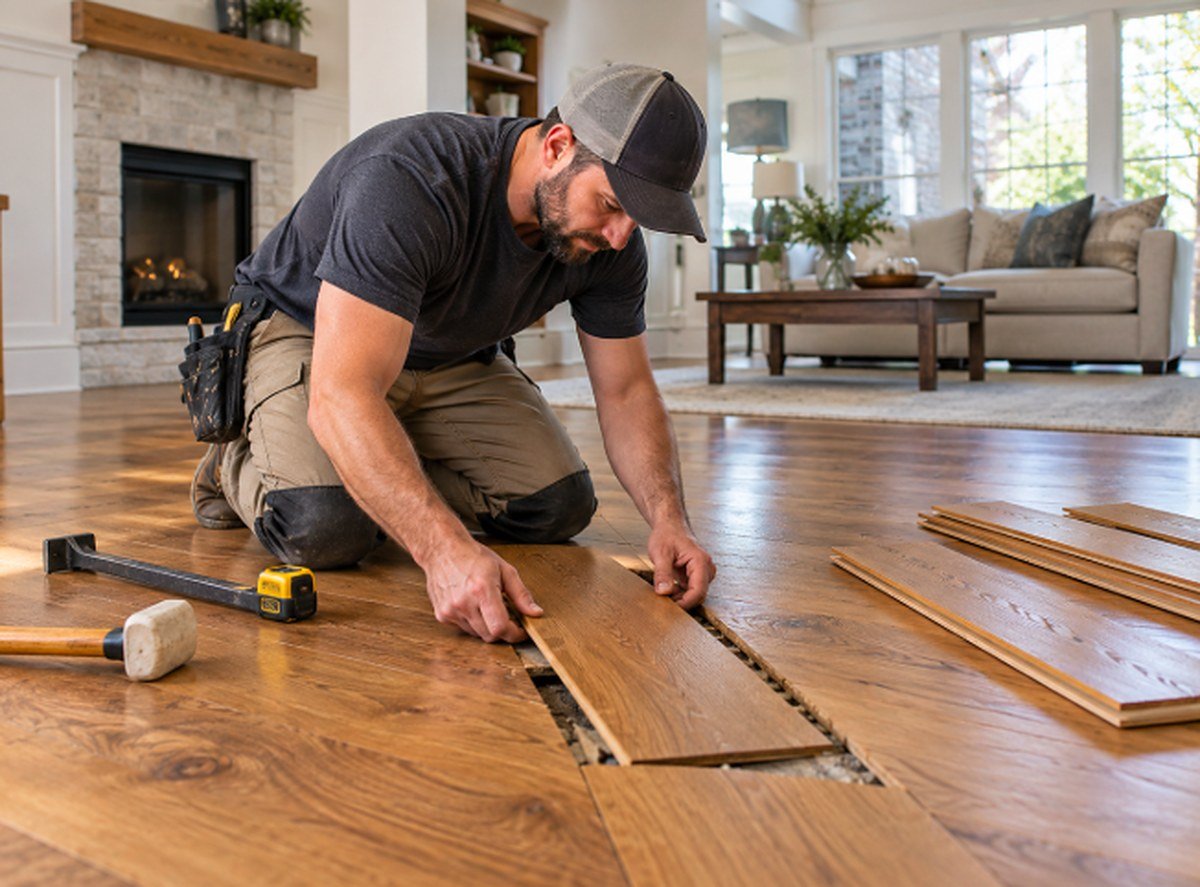
Individual board replacement is one of the most effective repair methods for localized hardwood damage. The damaged plank is removed without disturbing more of the floor than necessary, and a replacement board is fitted into the opening.

For the best appearance, the new board should match the original flooring in:

  • Species
  • Width
  • Thickness
  • Grade
  • Grain
  • Finish

Even if the exact same species is available, new wood may have a different color than flooring exposed to light and air for many years. Stain blending and refinishing can help reduce the difference, and in some cases refinishing the surrounding area creates a more uniform result.

Installer fitting a replacement board into a hardwood floor repair

Board & Structural Repairs

Cracked, Broken, Loose, Squeaky, and Separated Boards

01

Cracked Hardwood Repair

Boards can crack from age, impact, dryness, defects, or floor movement. Minor cracks may be repairable, severely split boards are better replaced, and nearby flooring is checked to see whether the crack is part of a larger movement problem.

02

Broken Floorboard Replacement

Broken boards can be removed individually without replacing the floor. The damaged plank is cut out, replaced with a compatible board, and stained and finished to blend in, ideal for impact damage, deep cracks, burns, or isolated water damage.

03

Loose Floorboard Repair

Loose boards may move, click, or shift due to failed fasteners, subfloor movement, adhesive problems, or expansion. Repair may involve securing the board, correcting the subfloor, replacing fasteners, or reinstalling the section.

04

Squeaky Wood Floor Repair

Squeaks usually come from movement between the flooring, fasteners, and subfloor. Some can be fixed from above, others need access from underneath, depending on the squeak's location and how the floor was installed.

05

Hardwood Gap Repair

Small seasonal gaps are normal as wood expands and contracts. Larger or permanent gaps may come from poor acclimation, installation issues, or dryness, and may be fixed with board adjustment, filler where appropriate, or replacement.

06

Hardwood Floor Separation Repair

Solid and engineered boards can separate due to moisture changes, poor installation, adhesive failure, or subfloor movement. Repairs include repositioning boards, replacing damaged planks, or correcting the installation underneath.

Moisture & Water Damage Repair

Always Fix the Water Source First

01

Cupped Hardwood Repair

Cupping occurs when board edges rise higher than the center, commonly from leaks, humidity, moisture below the floor, or improper installation conditions.

The moisture source is corrected before any sanding. Boards may flatten as moisture stabilizes; severe damage may need replacement or refinishing.

02

Buckled Wood Floor Repair

Buckling is when flooring lifts significantly off the subfloor, usually from flooding, leaks, insufficient expansion space, high humidity, or improper installation.

The area may be removed so the subfloor can dry and the moisture source corrected. Severely distorted boards often require replacement.

03

Wood Floor Water Damage Repair

Water can cause staining, swelling, cupping, buckling, mold concerns, and subfloor damage. The water source is always repaired before flooring work begins.

After drying, boards and subfloor are evaluated. Minor damage may be repairable; extensive exposure may require partial or complete replacement.

04

Wood Floor Repair After Water Leaks

Plumbing, dishwasher, refrigerator line, and roof leaks can damage flooring quickly. Once the leak is fixed, the area is thoroughly dried.

Flooring is then checked for swelling, staining, mold concerns, and subfloor damage. Some boards can be saved, while others need replacement.

Subfloor, Soft Spot & Uneven Floor Repair

Problems That Start Below the Surface

Subfloor Repair

Some hardwood problems originate below the visible surface. A damaged or uneven subfloor can cause movement, squeaks, soft areas, gaps, and premature flooring failure. Common subfloor problems include:

  • Loose plywood
  • Water damage
  • Soft spots
  • Rot
  • Uneven sections
  • Failed fasteners
  • Cracks
  • Moisture problems

Repairing the subfloor may be necessary before the hardwood can be properly restored.

Soft Spot Repair

A soft or spongy area can indicate a subfloor problem caused by moisture damage, weakened plywood, structural movement, or poor support. The affected flooring may need to be removed so the area underneath can be inspected and repaired.

Floor Leveling and Uneven Floor Repair

Uneven floors may result from subfloor problems, structural movement, moisture damage, or installation issues. Minor issues may need localized preparation, while larger problems may require subfloor repair or structural evaluation. Leveling before reinstalling flooring helps prevent repeat damage.

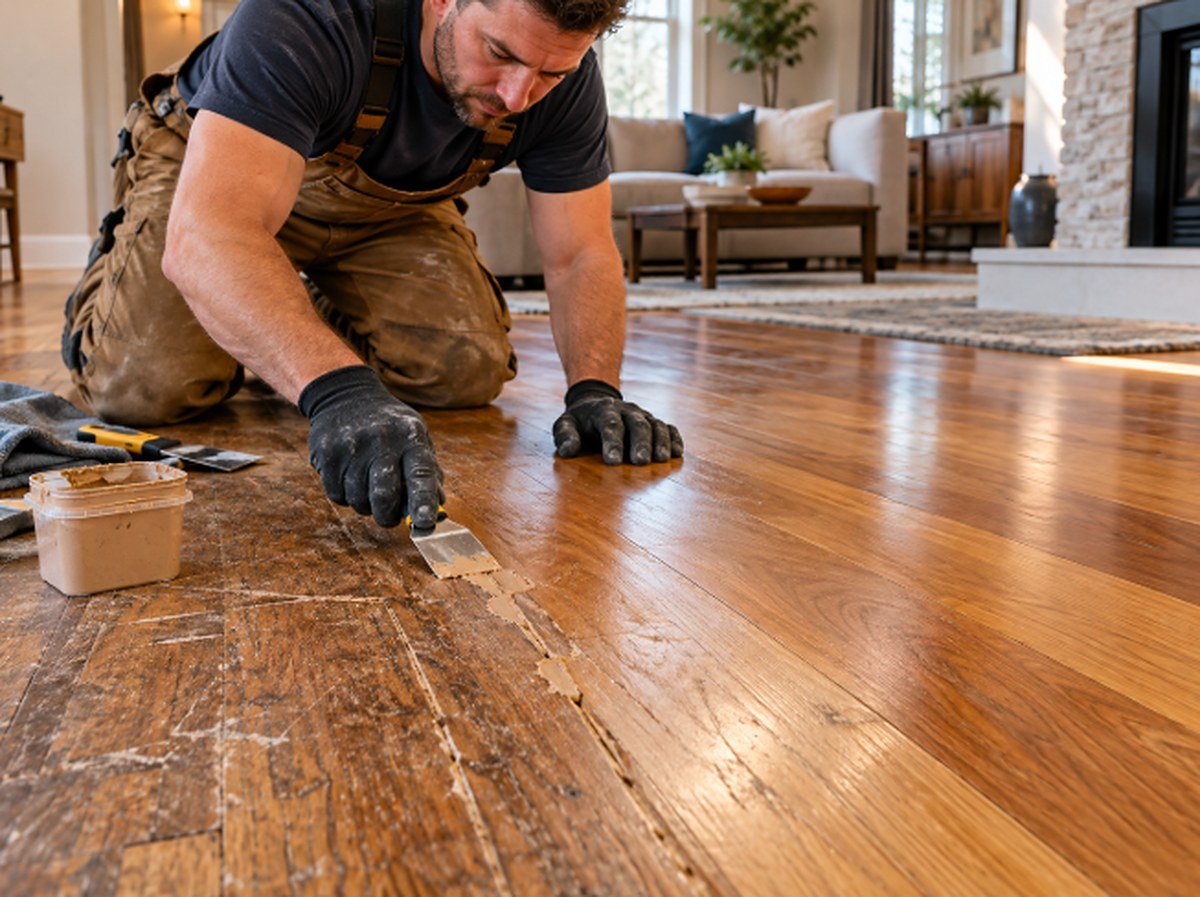
Repair technician filling gaps and cracks between hardwood boards

Repairs by Installation Type

Nail-Down, Glue-Down, Engineered, and Floating Floors

01

Repairing Nail-Down Hardwood

Loose boards or squeaks can develop if fasteners fail or the subfloor moves. Repair may involve adding approved fasteners, correcting the subfloor, or replacing boards, while avoiding visible fastener damage.

02

Repairing Glue-Down Hardwood

If adhesive fails or the subfloor was poorly prepared, boards may sound hollow, move, or lift. Repair often means removing the board, cleaning the area, and reinstalling it with a compatible adhesive.

03

Repairing Engineered Wood Flooring

Engineered floors can often be repaired by replacing individual boards. The thin wear layer on some products limits sanding, so the product's construction guides the repair method.

04

Repairing Floating Wood Floors

Floating floors can have separated joints, damaged locking systems, movement, or buckling. Some repairs need disassembly from the nearest wall, while others allow localized replacement.

Wood Floor Repair for Every Property

Homes, Businesses, Remodels, and Historic Floors

Residential Wood Floor Repair

Living rooms, bedrooms, kitchens, dining rooms, hallways, entryways, home offices, stair landings, condos, and townhomes, each repair planned around the floor type, damage, and surrounding materials.

Commercial Wood Floor Repair

Heavy traffic and equipment cause wear, scratches, and loose sections. Localized repair extends floor life and avoids full replacement, planned around business hours, traffic flow, and curing time. Commercial flooring.

Wood Floor Repair After Remodeling

Removed walls, cabinets, or built-ins can leave holes, gaps, mismatched flooring, or exposed subfloor. We fill these areas with matching or complementary hardwood after kitchen remodels, additions, and layout changes.

Hardwood Floor Patch Repair

Useful for small damaged sections or where fixtures and walls were removed. New boards are woven into the existing floor when possible, avoiding obvious straight-line patches.

Historic Wood Floor Repair

Older floors contain materials and craftsmanship that are hard to replace. Boards can sometimes be salvaged, repositioned, or matched with reclaimed materials to preserve original flooring.

When Should Wood Flooring Be Repaired Instead of Replaced?

Repair is often a good option when the damage is limited to a small portion of the floor and the surrounding hardwood remains in good condition.

Replacement may be more practical when damage is widespread, the floor has major structural problems, or matching repairs would be difficult. A professional inspection can help determine which approach makes the most sense for the condition of the flooring.

Repair When

  • Damage is limited to a small area
  • Surrounding boards are in good shape
  • The subfloor is sound
  • Boards can be matched

Replace When

  • Damage is widespread
  • Major structural problems exist
  • Matching would be difficult
  • The style is outdated
Wood floor replacement →

Our Wood Floor Repair Process

A typical repair project may include the following steps. The exact process depends on the type and extent of the damage.

  1. 01Inspecting the damaged area
  2. 02Identifying the cause
  3. 03Checking for moisture
  4. 04Evaluating the subfloor
  5. 05Removing damaged boards when necessary
  6. 06Repairing underlying problems
  7. 07Installing replacement boards
  8. 08Sanding or preparing the repair
  9. 09Matching stain and finish
  10. 10Inspecting the completed area

Wood Floor Repair FAQs

Answers to Common Hardwood Repair Questions

1.

Can you replace just one damaged hardwood board?

Yes. Individual board replacement is one of the most effective repairs for localized damage like deep scratches, cracks, burns, or pet stains. We carefully cut out the damaged plank without disturbing the surrounding floor, fit a matching replacement board, and then stain and finish it to blend in. It's usually far faster and more affordable than replacing a whole room.

2.

Why are my hardwood floors cupping or buckling?

Cupping and buckling are almost always caused by moisture. Plumbing leaks, high humidity, water under the floor, or too little expansion space can make boards swell and lift. Before any repair, we find and correct the moisture source. Mildly cupped boards may flatten once conditions stabilize, while severely buckled boards usually need to be removed and replaced.

3.

How do you fix squeaky hardwood floors?

Squeaks come from movement between the boards, fasteners, and subfloor. Depending on the cause and where the squeak is, we may secure loose boards, add approved fasteners, fix gaps in the subfloor, or work from underneath if there's access. We identify how the floor was installed first, so the repair stops the noise without leaving visible damage on the surface.

4.

Will a repaired board match the rest of my floor?

We match the species, width, thickness, grade, grain, and finish as closely as possible. However, older wood naturally darkens or lightens from years of light and air exposure, so a new board may look slightly different at first. Stain blending helps, and in some cases we recommend refinishing the surrounding area for the most uniform, seamless result.

5.

Should I repair or replace my wood floor?

Repair is usually the better choice when damage is limited to a small area and the rest of the floor is in good condition. Replacement makes more sense when damage is widespread, there are major structural or subfloor problems, or repairs would be hard to match. We inspect your floor, explain what we find, and recommend the option that makes the most sense.

Restore Your Hardwood Floors

Repair Instead of Replacing the Entire Floor

Damaged hardwood does not always mean the entire floor has to be replaced. Many scratches, cracks, loose boards, stains, gaps, water-damaged sections, and other problems can be repaired when the surrounding flooring is still in good condition.

Professional repair can help preserve your existing hardwood while improving its appearance, stability, and performance.

Contact us to schedule a wood floor inspection, discuss repair options, and request an estimate for your hardwood flooring project.

Book Service

Get a Free Estimate for Your Wood Flooring Project