
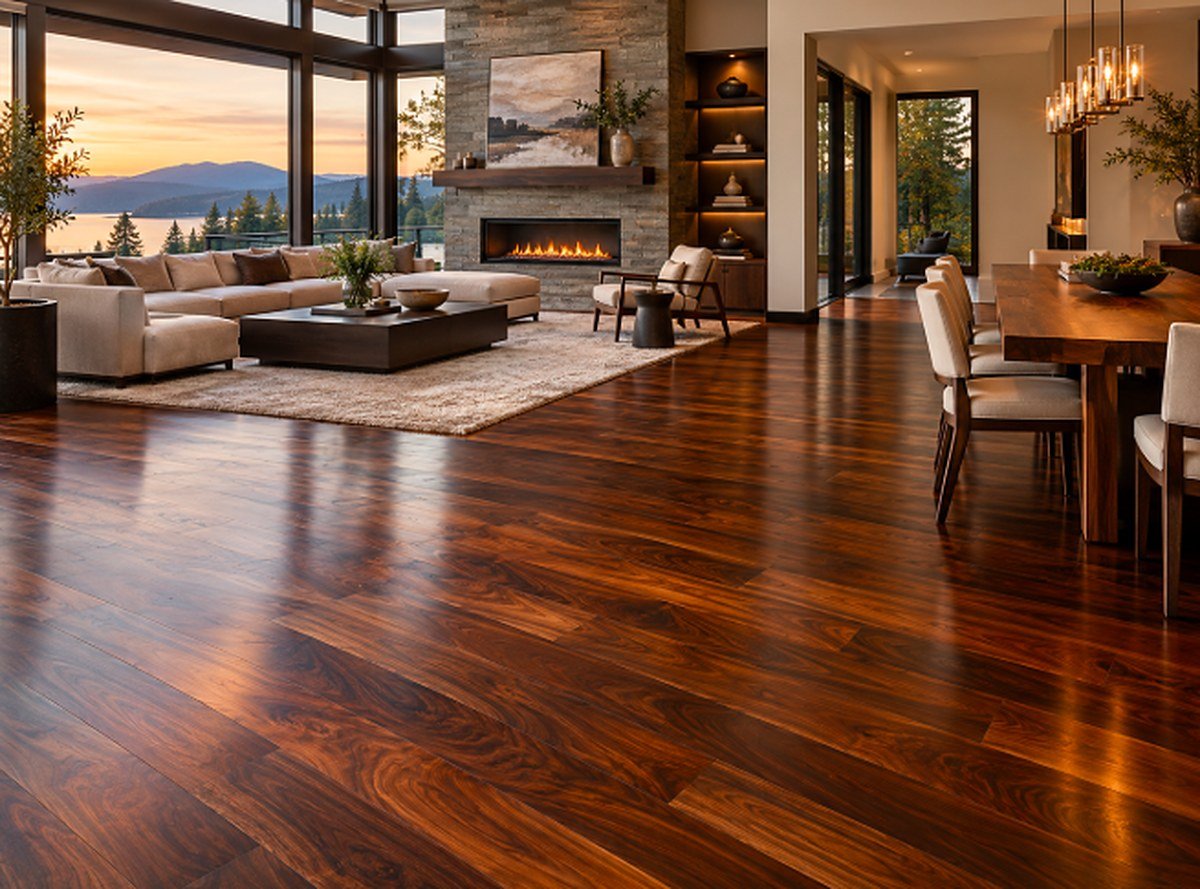
Hand-Scraped Hardwood
An intentionally textured, handcrafted or aged surface, subtle or pronounced, that makes everyday wear less noticeable. Oak and hickory are common, popular in:
- Rustic
- Farmhouse
- Traditional
- Luxury
- High-traffic areas
Specialty wood flooring gives homeowners, designers, builders, and commercial property owners more ways to create a distinctive interior, with reclaimed materials, textured surfaces, unusual plank dimensions, historic character, premium grading, or unique natural variation.
Beyond Standard Hardwood Options
Our specialty wood flooring services include installation, replacement, repair, refinishing, and custom planning for reclaimed wood, hand-scraped hardwood, wire-brushed flooring, distressed wood, antique flooring, extra-wide planks, long-plank flooring, character-grade hardwood, and select-grade materials.
Each specialty floor has different installation and maintenance requirements, so proper product selection and preparation are especially important.
Salvaged Timber Full of Character
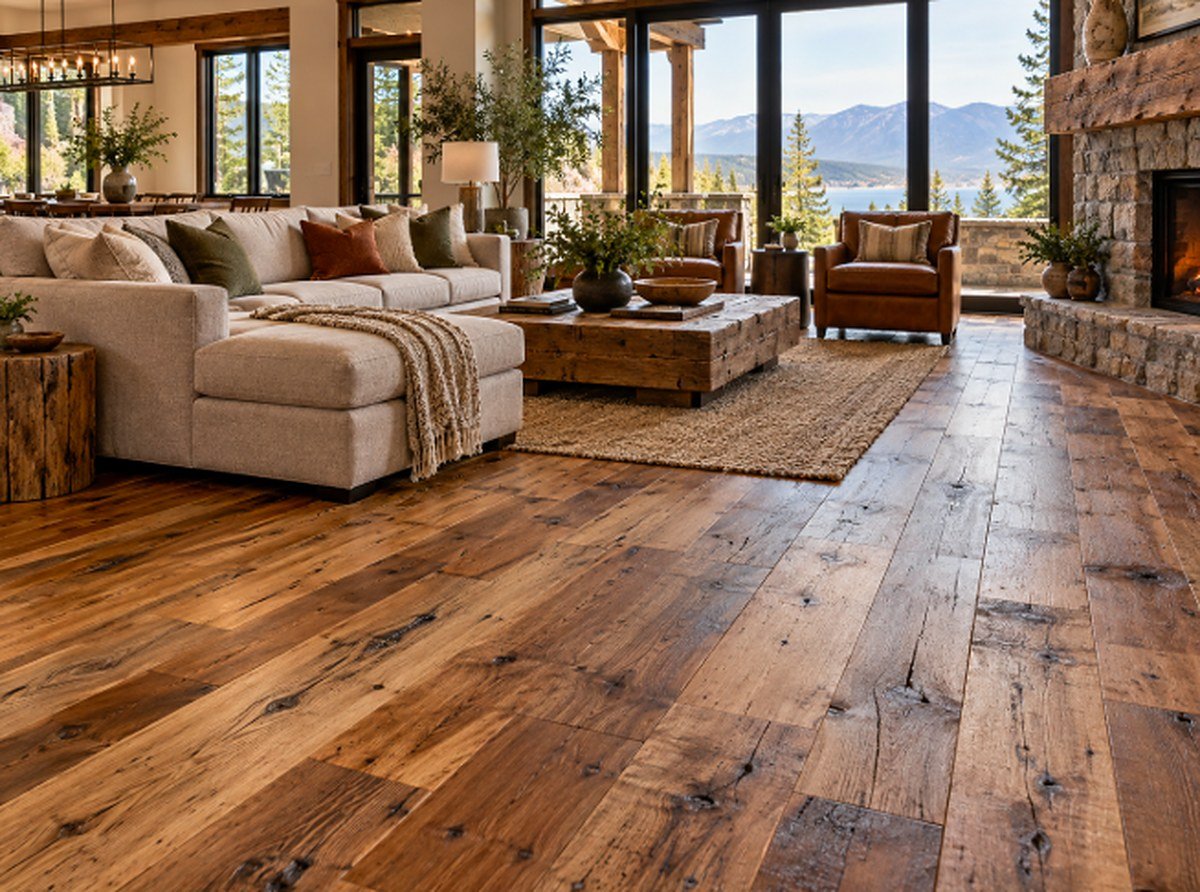
Reclaimed flooring is made from timber salvaged from older structures, barns, factories, and warehouses and prepared for reuse. Its biggest appeal is character:
No two reclaimed floors look the same, which suits rustic, farmhouse, industrial, historic, and custom interiors.
Oak's durability and familiar grain combine with an aged, salvaged look that includes variation normally removed from new flooring. It can be finished naturally or lightly stained to preserve its character.
Barn wood creates a strongly rustic, historic look with nail marks, weathering, uneven color, and saw patterns. Because it varies in thickness and condition, additional milling and preparation may be needed.
Wood from old industrial buildings may have dense grain, darkened surfaces, and marks from previous use, ideal for lofts, restaurants, boutiques, and spaces with exposed brick, concrete, and metal.
Hand-Scraped, Wire-Brushed, Distressed, Saw-Mark, and Weathered
An intentionally textured, handcrafted or aged surface, subtle or pronounced, that makes everyday wear less noticeable. Oak and hickory are common, popular in:
Removing softer surface fibers emphasizes the harder grain for a subtle texture that looks more natural than a smooth surface.
It may help disguise light scratches and is especially popular with white oak and engineered hardwood.
One of the most popular wire-brushed choices, highlighting grain with a clean, modern look. Popular finishes:
Intentionally aged or weathered, for floors with visible character rather than perfect uniformity:
Visible milling marks give the floor a rustic or industrial look.
Often combined with reclaimed materials, wide planks, or weathered stains.
Visible curved saw marks across the surface create a strong handcrafted look.
Often used in rustic and reclaimed-inspired interiors.
Portions of original saw texture remain while other areas are smoother, creating a less uniform surface.
Common with reclaimed and rustic hardwood.
Designed to look aged by exposure, combining gray, brown, beige, and washed tones with texture.
Great for coastal, farmhouse, rustic, and industrial interiors.
Preserving Character That Can't Be Reproduced
Antique flooring may be genuinely old reclaimed material or new flooring made to resemble historic wood. True antique wood has unique grain, patina, wear, and dimensions that are hard to reproduce.
It's used in historic renovations, luxury homes, libraries, studies, and specialty commercial interiors.
Historic projects focus on preserving original boards whenever possible, retaining character while improving usability. Services may include:
Patina develops as wood ages and reacts to light, air, use, and finishes, and reclaimed and antique floors may have patina that can't be easily duplicated.
Preserving it can be an important part of restoration work.
Plank Dimensions That Transform a Room
Wider-than-standard boards create a dramatic, spacious look and show more grain, popular in luxury, modern, farmhouse, and open-concept spaces:
One of the most requested premium styles, offering:
Very wide planks are often engineered for stability.
Longer boards reduce visible end joints for a cleaner, continuous look in large living rooms, open spaces, hallways, luxury properties, and commercial interiors.
Premium collections may offer longer average board lengths.
Engineered construction makes longer and wider boards possible while maintaining stability.
Extra-long white oak and European oak planks create a refined look in larger rooms.
Boards can be produced in custom widths, from extra-narrow to extra-wide, or mixed in one installation for a historic, rustic, or handcrafted look.
Mixed-width layouts can follow a repeating sequence or a random pattern.
Custom milling is used when standard dimensions won't work:
It helps new boards blend with existing floors.
Character, Rustic, and Select-Grade Flooring
Intentionally includes more visible natural variation for a natural, unique floor:
White oak's popularity with greater natural variation, where knots and color differences give wide planks a relaxed, organic look.
Works well in farmhouse, rustic, contemporary, and transitional interiors.
Hickory's natural light-and-dark variation is emphasized even more, creating a bold, distinctive floor.
Its relative hardness also suits active homes.
More visible knots, color variation, and natural character, where imperfections are part of the design. A good choice for:
Chosen for a more consistent look, with fewer large knots and less dramatic variation, popular in modern homes, luxury interiors, formal spaces, and offices.
Oak and maple are common; select maple creates an especially uniform, clean look for modern and Scandinavian interiors.
Popular in high-end interiors wanting uniform grain and color, supporting modern and minimalist designs. Works especially well with:
Live-Sawn, Quarter-Sawn, Rift-Sawn, and Mixed Rift & Quartered
Cut to display several grain patterns in the same board, combining straight and cathedral grain. Live-sawn white oak is especially popular in custom and high-end installations.
Emphasizes straighter grain and may show distinctive ray flecks. Quarter-sawn oak creates a classic, refined look for Craftsman, historic, traditional, and custom interiors.
A very straight, consistent grain for a clean, contemporary look, often chosen for high-end custom projects. Rift-sawn white oak is especially popular in modern interiors.
Premium oak floors combining rift-sawn and quarter-sawn boards for visual consistency with subtle natural variation, well suited to luxury and architectural interiors.
Herringbone, Chevron, and Parquet in Premium Materials
Herringbone in premium or specialty materials, where the material dramatically changes the pattern's look:
Chevron in premium wide-grain or select-grade wood.
Light white oak creates a modern look, while walnut or smoked oak is more dramatic.
Parquet can combine specialty species, grades, stains, and patterns, with borders or contrasting inserts.
Used in luxury homes, formal interiors, hotels, and boutique commercial spaces.
Luxury, Farmhouse, Modern, and Commercial Spaces
Specialty flooring gives luxury properties greater control over appearance, designed around the architecture:
Farmhouse floors use materials with visible character for a natural, relaxed look:
Modern specialty floors emphasize premium materials with simple finishes for a sophisticated look without excess decoration:
Specialty hardwood suits restaurants, hotels, boutiques, offices, and showrooms: reclaimed flooring adds character, while select-grade wide planks support modern interiors.
Traffic and maintenance are considered first. See commercial wood flooring.
What Specialty Materials Require
Reclaimed materials may need more preparation: cleaning, de-nailing, inspecting, re-milling, thickness-matching, sanding, and refinishing.
Thickness variation makes subfloor preparation especially important.
Extra-wide planks need careful attention to moisture, acclimation, and subfloor conditions, installed with nails, adhesive, or both. Engineered flooring is often chosen for very wide planks.
Long boards require careful layout and handling. Subfloor flatness is especially important because long planks bridge dips and high spots differently, and planning balances end-joint distribution.
Specialty floors can often be repaired, but matching material may require extra sourcing. Custom milling, stain blending, or salvaged boards help match reclaimed and antique floors.
Many specialty floors can be refinished if enough wood remains, but aggressive sanding may remove hand-scraped or wire-brushed texture, so the desired look is discussed first.
Care depends on the material and finish, and may include:
See finish options.
The right specialty floor depends on the desired appearance and conditions of the property. Important factors include:
A highly rustic reclaimed floor may be perfect for one space, while select-grade wide-plank oak may be better for another.
A typical specialty flooring project may include the following steps. The exact process depends on the specialty material selected.
Answers to Common Specialty Flooring Questions
Reclaimed wood flooring is made from timber salvaged from old barns, factories, warehouses, and other structures, then cleaned, de-nailed, and milled for reuse. It features nail holes, saw marks, weathering, knots, and a natural aged patina that new wood can't truly replicate. Every reclaimed floor is unique, which makes it ideal for rustic, farmhouse, industrial, and historic-style interiors.
Grade describes how much natural variation the boards show. Character-grade includes more knots, mineral streaks, sapwood, and color differences for a natural, organic look. Select-grade boards are chosen for a cleaner, more uniform appearance with fewer knots and less variation, ideal for modern, luxury, and minimalist interiors. Neither is better; it depends on the look you want.
Yes, extra-wide planks are very popular in LA for their spacious, upscale look. Because wider boards react more noticeably to humidity changes, engineered construction is often recommended, especially over the concrete slabs common in Southern California. Careful acclimation, moisture testing, and a flat subfloor are essential for a stable, beautiful installation.
Often, yes, but it takes care. Standard sanding would remove the original texture, so aggressive sanding is avoided. Depending on the floor, a screen-and-recoat can refresh the finish while keeping the texture, or the floor can be sanded and re-textured if needed. We discuss the look you want to keep before any refinishing work begins.
They're ways of cutting the log that change the grain pattern. Rift-sawn oak has a very straight, consistent grain for a clean, contemporary look. Quarter-sawn oak also has straight grain but can show distinctive ray flecks, giving a classic, refined appearance. Some premium floors mix both. These cuts are more stable and are popular in high-end custom projects.
More Control Over Texture, Character, and Design
Specialty wood flooring offers more control over texture, character, dimensions, and overall design than standard flooring products. Whether you prefer reclaimed oak, hand-scraped hickory, wire-brushed white oak, antique hardwood, long European oak planks, or a clean select-grade floor, the material can be selected to match the character of the property.
Contact us to compare specialty hardwood options, plank dimensions, grades, textures, finishes, and installation methods and request an estimate for your flooring project.
Get a Free Estimate for Your Wood Flooring Project