Engineered Wood Flooring in Los Angeles

Engineered wood flooring offers the appearance of natural hardwood with a layered construction designed to provide added stability in a variety of interior environments. It is a popular choice for homeowners, property managers, builders, and commercial spaces that want the warmth of wood with flexible installation options.

What Makes Engineered Wood Different

Real Wood Veneer Over a Stable Layered Core

Unlike solid hardwood, engineered flooring is manufactured with a real wood veneer over multiple structural layers. This construction can make it suitable for areas where solid hardwood may not always be the best option, including certain concrete subfloors, ground-level spaces, and rooms where changes in temperature or humidity may occur.

Our engineered wood flooring services include product selection, floor preparation, installation, replacement, and finishing details for residential and commercial properties.

  • Product selection and material comparison
  • Floor preparation and moisture testing
  • Installation and replacement
  • Transitions, trim, and finishing details
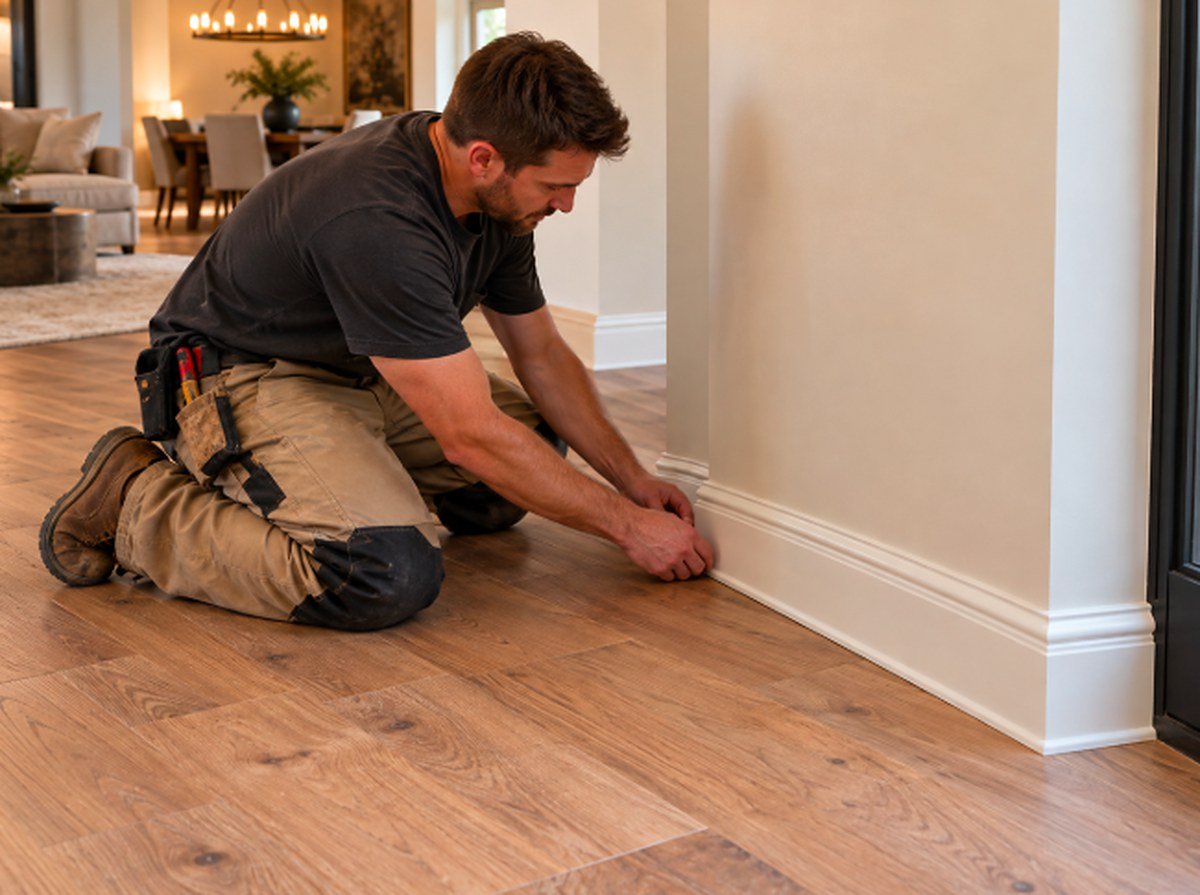
Installer finishing baseboard trim around new engineered wood flooring

Engineered Hardwood Installation

Careful Evaluation, Layout, and Preparation

Engineered hardwood installation begins with evaluating the room, subfloor, flooring material, and installation requirements. Depending on the product and existing surface, engineered flooring may be installed using glue-down, nail-down, staple-down, or floating methods.

Proper layout is important for creating consistent plank placement throughout the space. Doorways, transitions, walls, cabinets, stairs, and adjacent flooring should all be considered before installation begins.

We carefully prepare the installation area to help produce a smooth and professional finished floor.

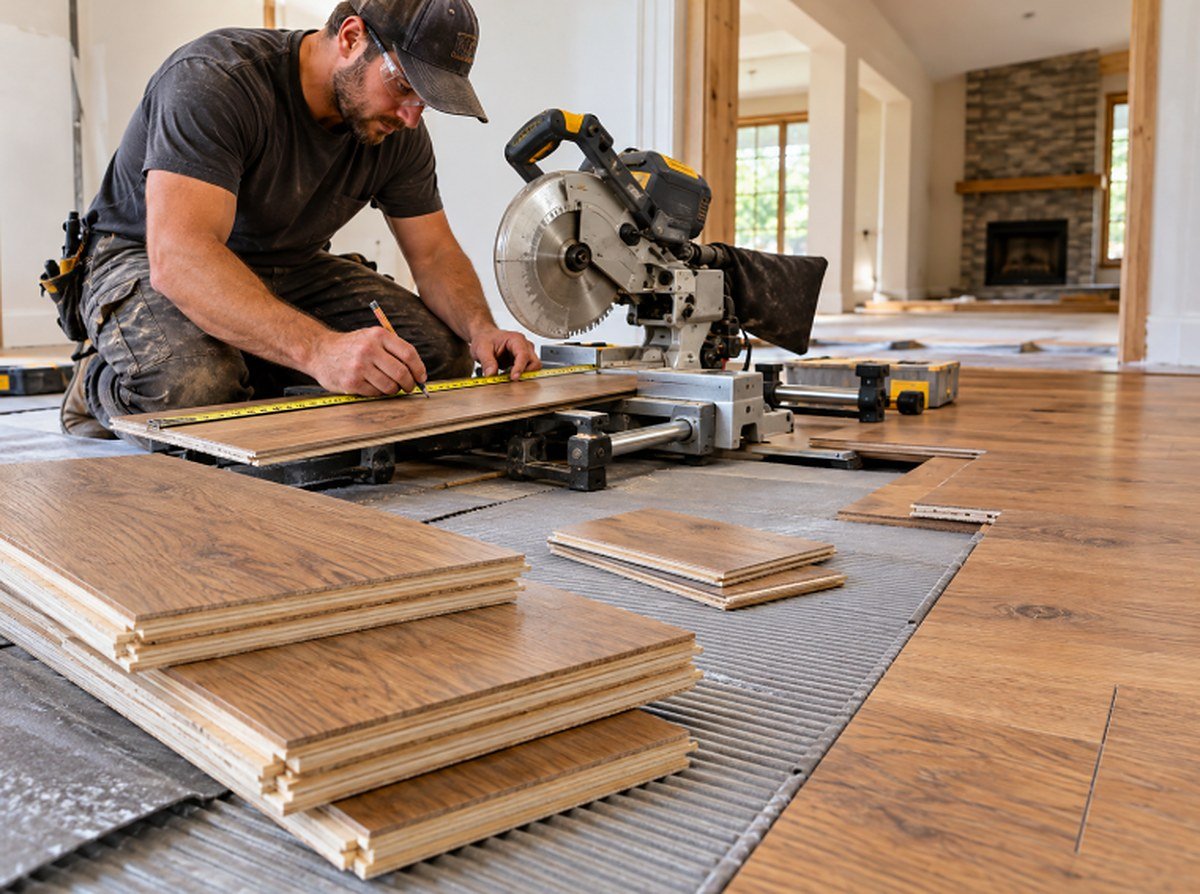
Installer measuring and cutting engineered wood planks with a miter saw on site

Installation Methods

01

Floating Engineered Wood Flooring

Floating installation allows engineered planks to connect together without being permanently attached to the subfloor. The floor is installed over an approved underlayment, allowing the connected surface to "float" above the base.

Floating floors can be useful in certain remodeling projects and concrete installations. Proper expansion space must be maintained around walls and fixed objects so the flooring can respond naturally to environmental changes.

02

Glue-Down Engineered Flooring

Glue-down installation uses flooring adhesive to secure engineered hardwood directly to the prepared subfloor. This method is commonly used over concrete and can provide a solid feel underfoot.

The correct adhesive must be selected for the product and environment. Subfloor moisture, surface cleanliness, flatness, adhesive coverage, and working time must all be carefully managed.

03

Nail-Down Engineered Flooring

Certain engineered hardwood products can be installed using nails or flooring staples over suitable wood subfloors. This method is similar to traditional hardwood installation and can provide a secure, permanent installation.

The flooring thickness, subfloor construction, fastener type, spacing, and manufacturer recommendations should be reviewed before work begins.

Engineered Wood Flooring Options

Plank Styles, Moisture Performance, and Wood Species

Wide Plank Engineered Flooring

Wide plank engineered flooring creates a spacious, modern appearance by reducing the number of visible seams. Wide planks are especially popular with white oak, European oak, walnut, and other premium finishes in open-concept homes, kitchens, bedrooms, offices, and luxury interiors.

The layered structure is designed to provide greater dimensional stability than traditional solid wide-plank flooring, and widths, lengths, textures, and colors can be matched to your design.
Waterproof Engineered Wood Flooring

Some modern engineered-style products are designed with enhanced moisture resistance, which can help in spaces where occasional spills may be a concern. However, moisture resistance varies significantly between products, and not every engineered wood floor is waterproof.

Product specifications should always be reviewed before choosing flooring for kitchens, entryways, or basements. Proper subfloor preparation and moisture testing are also important.

Engineered Oak Flooring

Engineered oak combines the classic appearance of oak with the stability of engineered construction. It is available in many colors, grades, plank widths, and textures to create a traditional, rustic, modern, or luxury look.

Popular options include natural oak, lightly stained oak, dark oak, wire-brushed and matte finishes, and wide-plank designs.

Engineered White Oak Flooring

White oak has become especially popular in contemporary residential design. It offers subtle grain and neutral tones ranging from beige and light brown to slightly gray or warm tan shades.

It works well in modern, coastal, Scandinavian, transitional, and minimalist interiors, and wide plank white oak creates a clean, open look in large rooms and whole-home installations.

Engineered Maple Flooring

Engineered maple provides a lighter and more uniform appearance than many oak products. Its smooth grain creates a bright, refined look in bedrooms, living areas, home offices, and contemporary spaces.

Its natural tones pair well with light cabinetry, neutral walls, and modern furniture, while engineered construction allows installation methods suited to different subfloors.

Engineered Walnut Flooring

Engineered walnut provides rich natural brown tones and distinctive grain patterns. It is commonly used in luxury interiors, offices, bedrooms, dining rooms, and living spaces where a warmer, more dramatic floor is desired.

It is available in multiple plank widths and finishes, and natural or matte finishes emphasize the wood's character without an overly glossy look.

Installation Over Concrete, Plywood & Existing Floors

The Right Method for Your Subfloor

Engineered Flooring Over Concrete

One major advantage of engineered wood flooring is that many products can be installed over properly prepared concrete. The slab is first evaluated for moisture, flatness, cleanliness, and condition, and high spots, low areas, cracks, or excess moisture are addressed. Depending on the manufacturer and site conditions, flooring may be glued directly to the concrete or floated over an approved underlayment or moisture barrier.

Engineered Flooring Over Plywood

Plywood subfloors provide several installation possibilities. Depending on the product, planks may be nailed, stapled, glued, or installed using another manufacturer-approved method. We inspect the plywood for loose sections, uneven areas, squeaks, moisture damage, and protruding fasteners so the new floor has a solid foundation.

Engineered Flooring Over Existing Floors

In some situations, engineered flooring can be installed over existing tile, certain vinyl surfaces, or other approved materials instead of removing them. The existing floor must be stable, flat, clean, and compatible, and floor height, door clearance, transitions, and moisture conditions are evaluated before deciding whether removal is necessary.

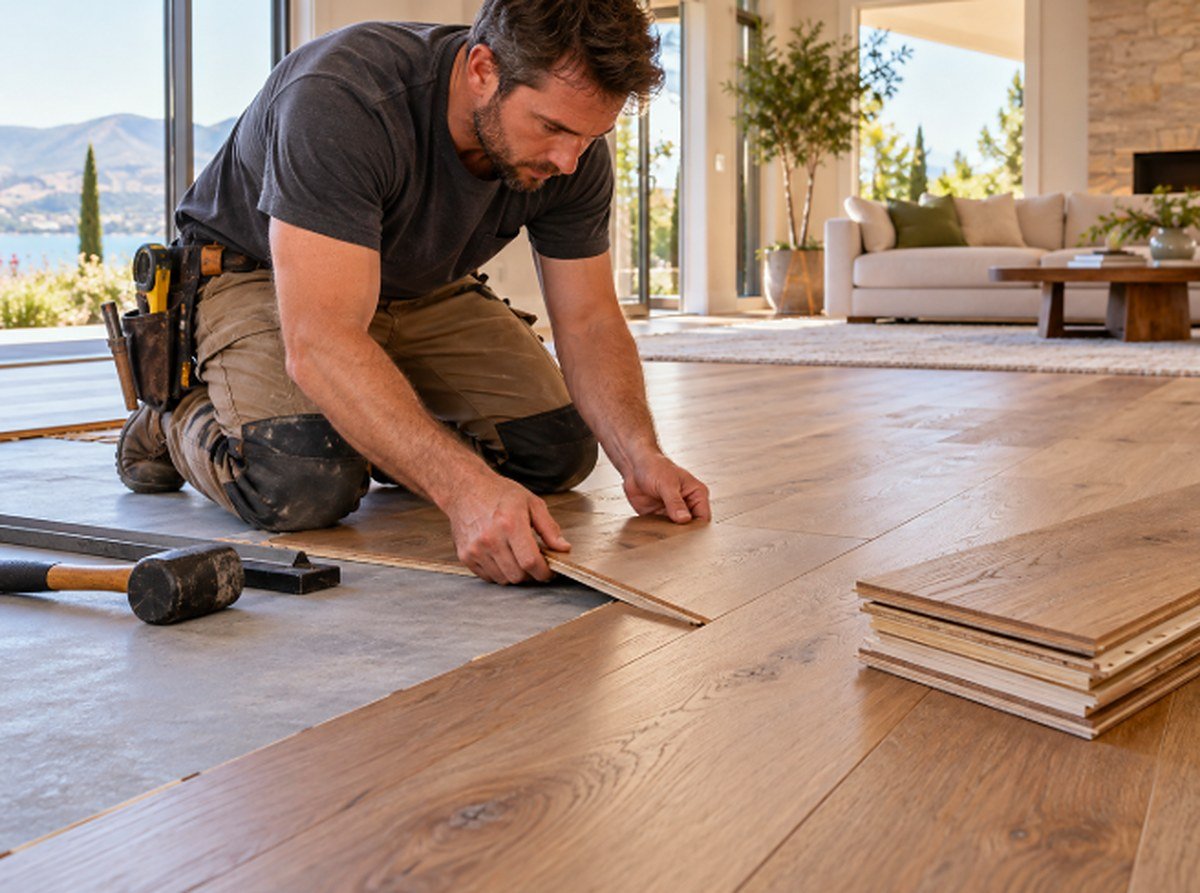
Engineered wood planks being installed over a prepared concrete subfloor

Engineered Wood Flooring for Every Room

Kitchens, Living Rooms, Bedrooms, Basements, and Commercial Spaces

Engineered Wood Flooring for Kitchens

Engineered wood can coordinate beautifully with cabinetry, countertops, and islands. Because kitchens see spills and moisture changes, choosing an appropriate product, cleaning spills quickly, and following the manufacturer's moisture requirements are important.

Engineered Wood Flooring for Living Rooms

Living rooms are one of the most popular areas for engineered hardwood. Wide planks help large spaces feel open and elegant, and the floor can continue into hallways and dining rooms for a consistent design throughout the home.

Engineered Wood Flooring for Bedrooms

Engineered hardwood adds warmth to bedrooms, with options from light oak and darker walnut to rustic textures and smooth modern finishes. Wood floors let rugs and furniture shine without competing patterns.

Engineered Wood Flooring for Basements

Certain engineered products may suit basements when moisture conditions allow. Moisture testing is especially important, a vapor barrier or specific adhesive may be required, and any water intrusion must be corrected before installation.

Engineered Wood Flooring for Commercial Spaces

Engineered hardwood works in offices, retail, boutiques, studios, and hospitality spaces. Products are selected based on foot traffic, maintenance needs, finish durability, and manufacturer specifications. Commercial flooring.

Engineered Wood Flooring Styles

Options for Every Interior

Engineered flooring is available in a wide range of styles. Popular choices include:

  • Natural white oak
  • European oak
  • Dark walnut
  • Rustic wood
  • Wide plank flooring
  • Wire-brushed surfaces
  • Hand-scraped finishes
  • Smoked wood tones
  • Light natural finishes
  • Gray wood flooring
  • Matte finishes
  • Character-grade flooring

These options allow engineered hardwood to work with traditional, contemporary, modern, farmhouse, coastal, and luxury interiors.

Choosing the Right Engineered Wood Flooring

Match the Product to Your Space

The right engineered floor depends on the room, subfloor, moisture conditions, traffic level, design preferences, and installation method.

Important factors to compare include plank thickness, veneer thickness, wood species, plank width, finish type, surface texture, installation system, and manufacturer requirements.

A flooring product that works well in one property may not be the best choice for another. Professional evaluation can help determine which materials are appropriate for the specific conditions of your project.

Professional Engineered Wood Flooring Installation

A high-quality engineered wood floor depends on both the material and the installation. Before work begins, the installation area should be inspected and prepared. Moisture conditions, floor flatness, existing flooring, transitions, and room layout should all be evaluated.

Careful planning can help create consistent plank patterns, clean transitions, properly finished edges, and a professional overall appearance. Whether you are remodeling one room or installing engineered hardwood throughout an entire property, we provide installation solutions designed around the specific flooring product and space.

Request an Estimate

Engineered Wood Flooring FAQs

Answers to Common Engineered Flooring Questions

1.

What is engineered wood flooring?

Engineered wood flooring has a real hardwood veneer on top, bonded to multiple structural layers underneath. From above, it looks just like solid hardwood, but the layered core is designed to resist expansion and contraction better. That added stability makes it a smart choice for many Los Angeles homes, especially over concrete slabs and in rooms with changing temperature or humidity.

2.

Can engineered wood flooring be installed over concrete?

Yes, and it's one of its biggest advantages. Many engineered products can be installed over properly prepared concrete. We test the slab for moisture, check flatness, and fix cracks or high and low spots first. Depending on the product and site conditions, we either glue the flooring directly to the concrete or float it over an approved underlayment or moisture barrier.

3.

Is engineered wood flooring waterproof?

Not always. Some modern engineered-style products are designed with enhanced moisture resistance, but performance varies a lot between manufacturers, and many engineered wood floors are not waterproof. For kitchens, entryways, and basements, we review product specifications carefully, test subfloor moisture, and recommend options that match the conditions of your space. Wiping up spills quickly is always recommended.

4.

Can engineered flooring go over my existing floor?

Sometimes. Engineered flooring can be installed over existing tile, certain vinyl surfaces, or other approved materials if the old floor is stable, flat, clean, and compatible with the new system. We also check floor height, door clearance, transitions, and moisture before recommending it. In some cases, removing the old floor is the better option for long-term performance.

5.

Which engineered wood species is most popular?

White oak is currently the most popular choice, especially in wide planks with natural or matte finishes. It suits modern, coastal, Scandinavian, and transitional homes. Classic oak is also very popular for its versatility, while maple offers a lighter, more uniform look and walnut adds rich, dark tones for a luxurious feel. We can bring samples so you can compare in your space.

Upgrade Your Space With Engineered Wood Flooring

Natural Wood Beauty, Modern Construction

Engineered wood flooring combines natural wood beauty with modern flooring construction and flexible installation options. From wide-plank white oak and classic oak to maple, walnut, and other premium finishes, there are engineered flooring options for nearly every interior style.

Whether your project involves concrete, plywood, an existing floor, a single room, or an entire property, proper product selection and installation can make a major difference in the finished result.

Contact us to discuss your engineered wood flooring project, compare materials, review installation options, and request an estimate.

Book Service

Get a Free Estimate for Your Wood Flooring Project