Wood Flooring Finishes in Los Angeles

The finish applied to hardwood flooring has a major effect on the floor's appearance, durability, maintenance, and overall feel. The same wood species can look completely different with a natural, matte, satin, gloss, oil, or polyurethane finish.

Professional Wood Floor Finishing Services

Protection That Lets the Wood Shine Through

Our wood flooring finishing services include new floor finishing, refinishing, recoating, stain protection, and finish selection for both residential and commercial properties.

We help property owners compare different finish types based on traffic, design preferences, drying time, maintenance expectations, and the type of wood being installed or restored.

A properly selected and applied finish helps protect the surface while allowing the natural grain and color of the wood to remain visible.

  • Matte, satin, semi-gloss, and high-gloss sheens
  • Water-based, oil-based, and hardwax oil systems
  • Low-VOC and low-odor options
  • Recoating to extend the life of your floor
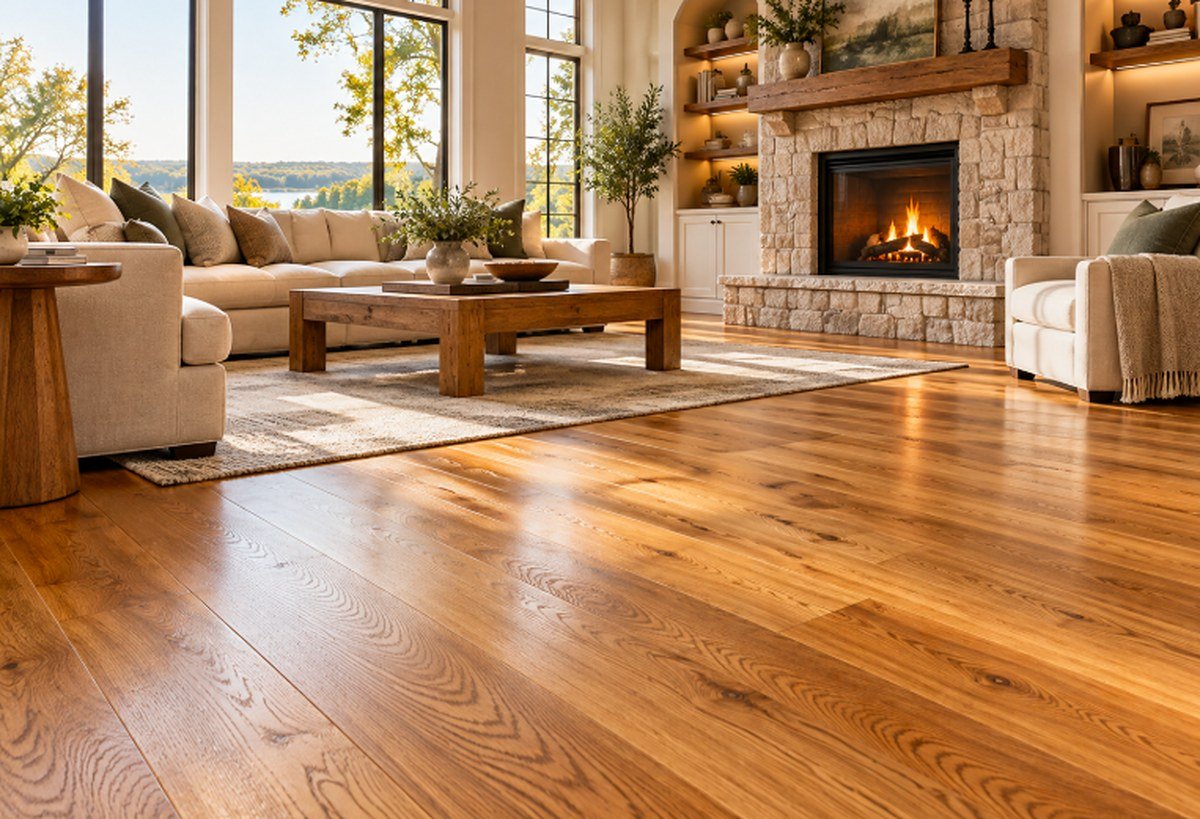
Open kitchen with wide plank oak flooring in a natural matte finish

Hardwood Finish Sheen Levels

From Natural Matte to Formal High-Gloss

Matte Hardwood Finish

Very little reflection for a natural-looking floor, especially popular with wide plank and light hardwood. Matte makes minor scratches, dust, and wear less noticeable, ideal for modern, luxury, farmhouse, Scandinavian, commercial, and high-traffic spaces.

Satin Hardwood Finish

One of the most popular sheens: a soft glow without strong reflection. Versatile for traditional and modern interiors, satin adds more depth than matte while staying easier to maintain visually than gloss.

Semi-Gloss Hardwood Finish

More reflection and a more polished look for formal rooms and traditional homes. Scratches, dust, and imperfections show more, so careful preparation is especially important.

High-Gloss Hardwood Finish

A strong reflective surface and formal look that makes grain and color more pronounced, used in formal homes, showrooms, and decorative commercial spaces. Dust, footprints, and scratches are more noticeable.

MatteLowest reflection and natural appearance
SatinSoft sheen and versatile style
Semi-glossBrighter and more polished
GlossHighest reflection and formal appearance

Most homeowners select matte or satin for everyday living spaces.

01

Matte vs. Satin Finish

Both are popular low-sheen options. Matte has less reflection and looks more natural, while satin adds slightly more sheen and visual depth.

Matte may hide minor dust and scratches better; satin looks a bit more polished. The choice depends on style and maintenance preference.

02

Satin vs. Semi-Gloss Finish

Satin provides a softer sheen, while semi-gloss reflects more light.

Satin is often chosen for everyday rooms because it balances a natural look with polish; semi-gloss feels more formal but shows imperfections more easily.

03

Gloss vs. Matte Hardwood

Gloss reflects more light and makes the surface look polished, while matte emphasizes the grain for a more understated look.

Modern interiors often favor matte, while formal or traditional spaces may use higher-sheen coatings.

Natural, Clear & Color-Preserving Finishes

Keep, Warm, or Protect the Wood's Original Color

Natural Finish Hardwood

A natural finish highlights the wood's original appearance rather than dramatically changing its color, popular in modern, Scandinavian, coastal, minimalist, and contemporary interiors. It's especially popular with:

  • White oak
  • Maple
  • Ash
  • Walnut
  • Hickory
  • European oak

Clear Hardwood Floor Finish

Clear finishes protect the wood while keeping its natural look visible, over unstained hardwood or certain stained floors. White oak, walnut, maple, and hickory are commonly finished this way.

Ambering Hardwood Finish

Some finishes add warmth or amber color over time, which can be desirable in traditional designs. Oil-based polyurethane creates more warmth than many water-based finishes, depending on the product and species.

Non-Yellowing Hardwood Finish

To preserve a pale or neutral floor, water-based systems designed to minimize yellowing are commonly chosen, which is especially important with white oak, maple, gray stains, and light flooring.

Floor Finish Color Testing

Even a clear finish may deepen or warm the natural tone. Testing a sample area shows how your floor will look after both stain and finish are applied.

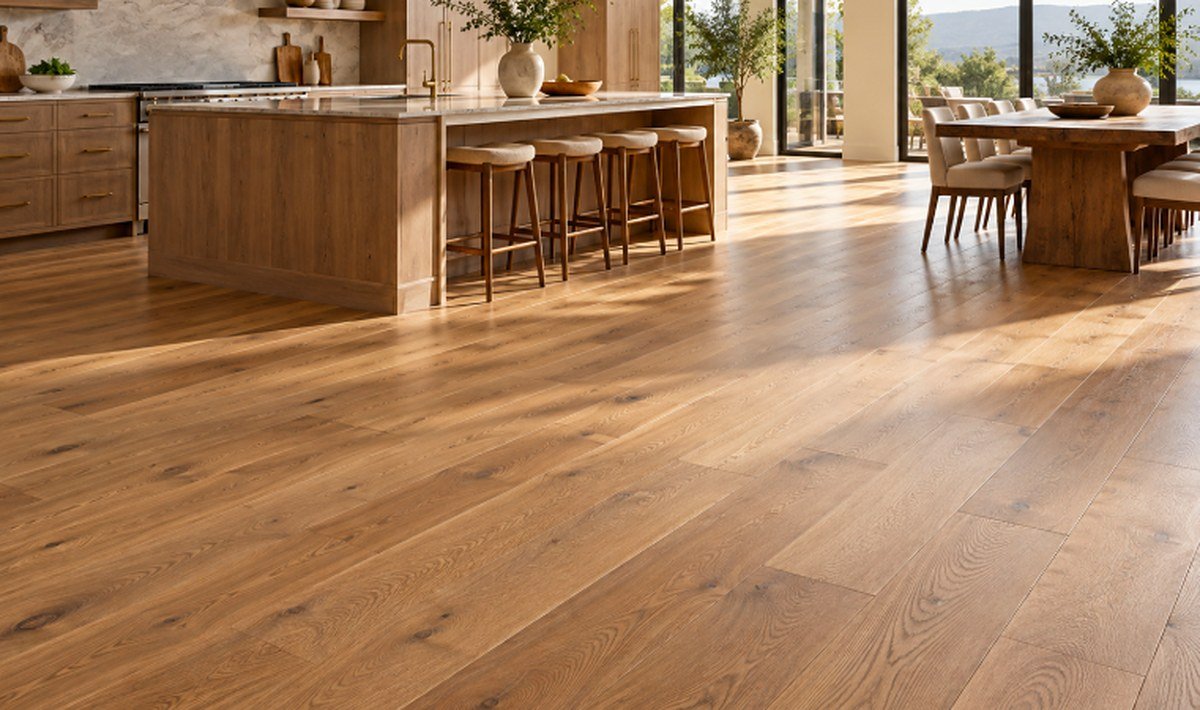
Living room with natural oak hardwood in a soft satin finish

Finish & Coating Systems

Polyurethanes, Oils, Hardwax Oil, Wax, and Sealers

01

Water-Based Hardwood Finish

Water-based finishes generally dry faster and amber less than oil-based polyurethane, preserving lighter natural color. They work especially well with:

  • White oak
  • Maple
  • Ash
  • Light stains
  • Gray flooring
  • Natural finishes

Available in matte, satin, semi-gloss, and more.

02

Water-Based Polyurethane

A protective surface coating for new hardwood and refinishing, with relatively fast drying and a clearer finish that doesn't dramatically warm the wood.

Multiple coats are typically applied; the number and drying requirements depend on the product.

03

Oil-Based Polyurethane

A traditional finish that creates a warmer, slightly amber look, enhancing oak, walnut, cherry, and other species where a richer tone is desired.

It typically needs more drying time between coats and is often used in traditional and transitional interiors.

04

Oil-Finished Hardwood Flooring

Oil finishes penetrate the wood rather than forming only a thick film, creating a natural, low-sheen look that emphasizes texture and grain.

Popular with wide plank, European oak, and luxury interiors; maintenance may involve periodic re-oiling instead of full refinishing.

05

Hardwax Oil Finish

Penetrating oils combined with waxes create a natural-looking protective finish for premium floors. Benefits may include:

  • Natural wood look
  • Visible grain texture
  • Localized maintenance
  • Lower sheen
  • Rich wood tone

Care requirements depend on the product.

06

Penetrating Oil Finish

Penetrating oils soak into the wood fibers for a natural look and feel.

Small areas can sometimes be maintained locally rather than requiring a full-floor recoat, depending on the product.

07

Wax Finish

A traditional finish with a soft, low-sheen look, still found on older and specialty floors.

Wax needs specific maintenance and may not be compatible with modern polyurethane unless fully removed, so it's identified before refinishing.

08

Moisture-Cure Finishes

Some professional systems use moisture-cure products that offer strong durability.

They may involve stronger odors and more demanding application, and are used in specific professional applications rather than typical DIY projects.

09

Wood Floor Sealer

Some systems use a separate sealer before topcoats to help control stain appearance, improve adhesion, or create a specific visual effect.

The sealer must be compatible with both the stain and finish.

Low-VOC & Low-Odor Finishes

Options for Occupied Homes, Nurseries, and Offices

01

Low-VOC Hardwood Finish

Low-VOC finishes reduce the volatile organic compounds released during application and curing compared with some traditional coatings, and many modern water-based finishes come in lower-VOC formulas.

They're useful for occupied homes, renovations, and anyone who prefers reduced odor. VOC levels vary by manufacturer, so specifications are reviewed.

02

Zero-VOC and Very Low-Odor Options

Some products are marketed as zero-VOC or very low odor, attractive for bedrooms, nurseries, offices, and occupied homes where odor is a concern.

Availability and performance vary, so the product is chosen for durability, compatibility, and manufacturer requirements, not VOC rating alone.

Factory-Finished vs. Site-Finished

Prefinished Coatings and Finishes Applied in Your Home

01

Factory-Finished Hardwood

Prefinished hardwood is coated in a controlled factory before installation, giving a consistent look and letting the floor be used sooner. Many colors, textures, and sheens are available; boards may have visible beveled edges.

02

Site-Finished Hardwood

Installed unfinished, then sanded, stained, and coated in your home. Boards are finished together for a more continuous look, with more flexibility for custom stain colors and sheens.

03

UV-Cured Flooring Finish

Some prefinished products use factory coatings cured with ultraviolet light, providing a durable surface in many colors and textures. Repair and maintenance depend on the specific product.

04

Aluminum Oxide Finish

Found on many prefinished and engineered floors to increase wear resistance. Because it can be difficult to sand compared with site finishes, refinishing options should be considered before purchasing.

05

Ceramic-Reinforced Finish

Some manufacturers add ceramic particles or other additives to factory coatings for wear resistance. Products vary significantly, so specifications are reviewed for durability and refinishing potential.

06

Finish for Engineered Hardwood

Many engineered floors are factory-finished, but some can be site-finished or recoated depending on wear layer thickness and manufacturer guidance. The construction is evaluated first.

Finishes by Wood Species

White Oak, Red Oak, Maple, Walnut, and Hickory

Finish for White Oak Flooring

White oak is especially popular with natural, matte, and satin finishes that preserve its neutral tone and subtle grain.

Water-based, low-sheen coatings are common, while oil finishes create a warmer appearance.

Finish for Red Oak Flooring

Red oak has naturally warmer undertones, and both oil-based and water-based finishes can work.

Oil-based products enhance warmth, while water-based finishes keep the floor closer to its original tone.

Finish for Maple Flooring

Maple often looks best with clear or lightly tinted finishes, and water-based finishes help avoid excessive ambering.

Because maple shows sanding imperfections easily, careful preparation is important.

Finish for Walnut Flooring

Walnut already has rich natural color, so clear or lightly tinted finishes preserve its depth and grain.

Matte and satin keep the natural color as the primary feature.

Finish for Hickory Flooring

A clear or lightly tinted finish emphasizes hickory's strong natural variation.

Matte and satin coatings suit its rustic, natural character.

Refinishing Old Floor Coatings

Older floors may have polyurethane, wax, oil, shellac, or other finishes, and the existing coating is identified before applying a new product.

Some systems aren't compatible without complete sanding or special preparation. See refinishing.

Finishes for Every Space

Homes, Businesses, Kitchens, Stairs, Pets, and More

01

Commercial Hardwood Finish

Commercial spaces need finishes for heavier traffic, considering:

  • Foot traffic
  • Furniture movement
  • Cleaning frequency
  • Maintenance schedule
  • Recoat options
02

Residential Hardwood Finish

Home finishes balance appearance, durability, drying time, and maintenance.

Many homeowners choose matte or satin for a natural look that reduces the visibility of everyday wear.

03

Finish for High-Traffic Areas

Hallways, kitchens, entryways, and family rooms need durable protection, with the right product, finish, maintenance, and mats.

Periodic recoating maintains the protective layer before it wears through.

04

Finish for Homes With Pets

Lower-sheen finishes make scratches less noticeable than high gloss, and wire-brushed textures help disguise wear.

No finish makes real wood scratch-proof, but the right coating helps manage everyday use.

05

Finish for Kitchens

A properly applied finish helps reduce surface penetration from minor spills in kitchens.

Water should still be cleaned promptly, since no finish makes a wood floor completely waterproof.

06

Finish for Stairs

Stairs receive concentrated traffic and need a durable finish.

Matte and satin are common for a natural look that reduces visible wear, with treads properly prepared before coating.

07

Finish for Rental Properties

Rental owners often prioritize durability, maintenance, and ease of recoating.

Medium-tone floors with matte or satin finishes hide normal wear better than very light or dark glossy floors.

08

Finish for Luxury Homes

Luxury floors may use high-quality water-based systems, hardwax oils, custom low-sheen finishes, or specialty factory coatings.

Wide plank white oak and walnut are especially popular with matte and natural finishes.

Drying, Curing & Recoating

Compatibility, Timing, and Maintaining Your Finish

01

Stain and Finish Compatibility

Not all stains and finishes are compatible, and drying times and formulations vary. Applying finish before stain is fully dry can cause adhesion or appearance problems; systems from the same manufacturer can simplify the process.

02

Hardwood Finish Drying Time

Water-based finishes may dry relatively quickly between coats, while oil-based products often need longer. Temperature, humidity, air movement, and coating thickness all matter, and manufacturer instructions are followed.

03

Hardwood Finish Curing Time

A floor can feel dry before it's fully cured, and full curing takes longer. Furniture, rugs, pets, and heavy traffic may need to be limited during curing, depending on the product.

04

Recoating Hardwood Floors

Recoating adds a new protective layer without sanding to bare wood, useful when the finish is worn but the wood isn't deeply damaged. A screen-and-recoat can extend floor life and delay full refinishing.

05

When to Recoat Hardwood

Recoating works best before the finish wears through. Signs include:

  • Dullness
  • Light scratches
  • Loss of sheen
  • High-traffic wear
  • Surface scuffing

Deep scratches, stains, or exposed wood may need full sanding.

06

Choosing the Right Sheen

Matte offers the lowest reflection and most natural look, satin a soft versatile sheen, semi-gloss a brighter polish, and gloss the highest reflection and most formal appearance. Most homeowners choose matte or satin.

Choosing the Right Wood Floor Finish

The best finish depends on several factors:

  • Wood species
  • Existing stain
  • Desired color
  • Traffic level
  • Pets
  • Children
  • Room type
  • Drying time
  • Maintenance preference
  • Interior style

There is no single finish that is best for every floor. The entire flooring system should be considered before making a final selection.

Professional Wood Floor Finishing Process

A typical finishing project may include the following steps. The exact process depends on the finish system and condition of the floor.

  1. 01Inspecting the hardwood
  2. 02Completing necessary repairs
  3. 03Sanding when required
  4. 04Cleaning the surface
  5. 05Applying stain if selected
  6. 06Allowing the stain to dry
  7. 07Applying sealer when appropriate
  8. 08Applying the first finish coat
  9. 09Allowing proper drying
  10. 10Preparing between coats when required
  11. 11Applying additional finish coats
  12. 12Allowing the floor to cure
  13. 13Completing a final inspection

Wood Flooring Finishes FAQs

Answers to Common Finish Questions

1.

What is the best finish for hardwood floors?

There's no single best finish for every floor. For most homes, a quality water-based polyurethane in matte or satin offers a great balance of durability, a natural look, and easy maintenance. Oil-based polyurethane adds warmth to traditional floors, while hardwax oil gives premium floors a natural, low-sheen look. We recommend a finish based on your wood, traffic, pets, and style.

2.

Should I choose a matte or satin finish?

Both are popular low-sheen choices. Matte has the least reflection, looks the most natural, and hides dust and minor scratches best, making it ideal for modern homes, pets, and busy households. Satin has a soft glow with a bit more depth and polish, and suits both traditional and modern interiors. We can show you samples of both on your actual floor.

3.

What is the difference between water-based and oil-based polyurethane?

Water-based polyurethane dries faster, has lower odor, and stays clearer, so it preserves light and gray floors without yellowing. Oil-based polyurethane dries more slowly and adds a warm amber tone that deepens over time, which many people love on red oak and traditional floors. Both provide strong protection when properly applied in multiple coats.

4.

How long before I can walk on newly finished floors?

It depends on the finish system, temperature, and humidity. With many water-based finishes, light foot traffic in socks is often possible within about a day, while oil-based finishes usually take longer. Full curing can take several days to a few weeks, so furniture, rugs, and pets should wait. We give you a clear schedule for your specific product.

5.

Are there low-odor or low-VOC finish options?

Yes. Many modern water-based finishes come in low-VOC formulas with much less odor than traditional coatings, and some products are marketed as zero-VOC or very low odor. They're a great choice for occupied homes, bedrooms, nurseries, and offices. We choose a product based on durability and compatibility as well as VOC rating, so you get both comfort and performance.

Protect and Enhance Your Hardwood Flooring

A Finish Chosen for Appearance and Performance

The right finish can protect hardwood while bringing out the natural beauty of the wood. Whether you prefer a natural matte appearance, versatile satin sheen, traditional oil-based finish, clear water-based coating, or a premium hardwax oil system, the finish should be selected around both appearance and performance.

Contact us to compare hardwood floor finishes, sheen levels, coating systems, and maintenance options and request an estimate for your flooring project.

Book Service

Get a Free Estimate for Your Wood Flooring Project