Hardwood Stair Flooring in Los Angeles

Hardwood stairs can become one of the most noticeable architectural features in a home. When treads, risers, landings, and surrounding flooring are coordinated properly, the entire staircase looks more polished, consistent, and connected to the rest of the interior.

Hardwood Stair Installation

Precise Measuring for a Clean, Durable Staircase

Our hardwood stair flooring services include new stair installation, tread replacement, riser installation, stair refinishing, nosing, landings, custom staircase details, and color matching with existing hardwood floors.

Hardwood stair installation can transform an older staircase into a cleaner, more updated feature, replacing carpet, laminate, damaged wood, or other materials. Common materials include oak, white oak, red oak, maple, walnut, hickory, and engineered products designed for stairs.

Each tread and riser must be measured carefully because stair dimensions can vary from step to step.

  • New treads, risers, nosing, and landings
  • Carpet and laminate to hardwood conversions
  • Stair refinishing and custom staining
  • Color matching with your existing floors
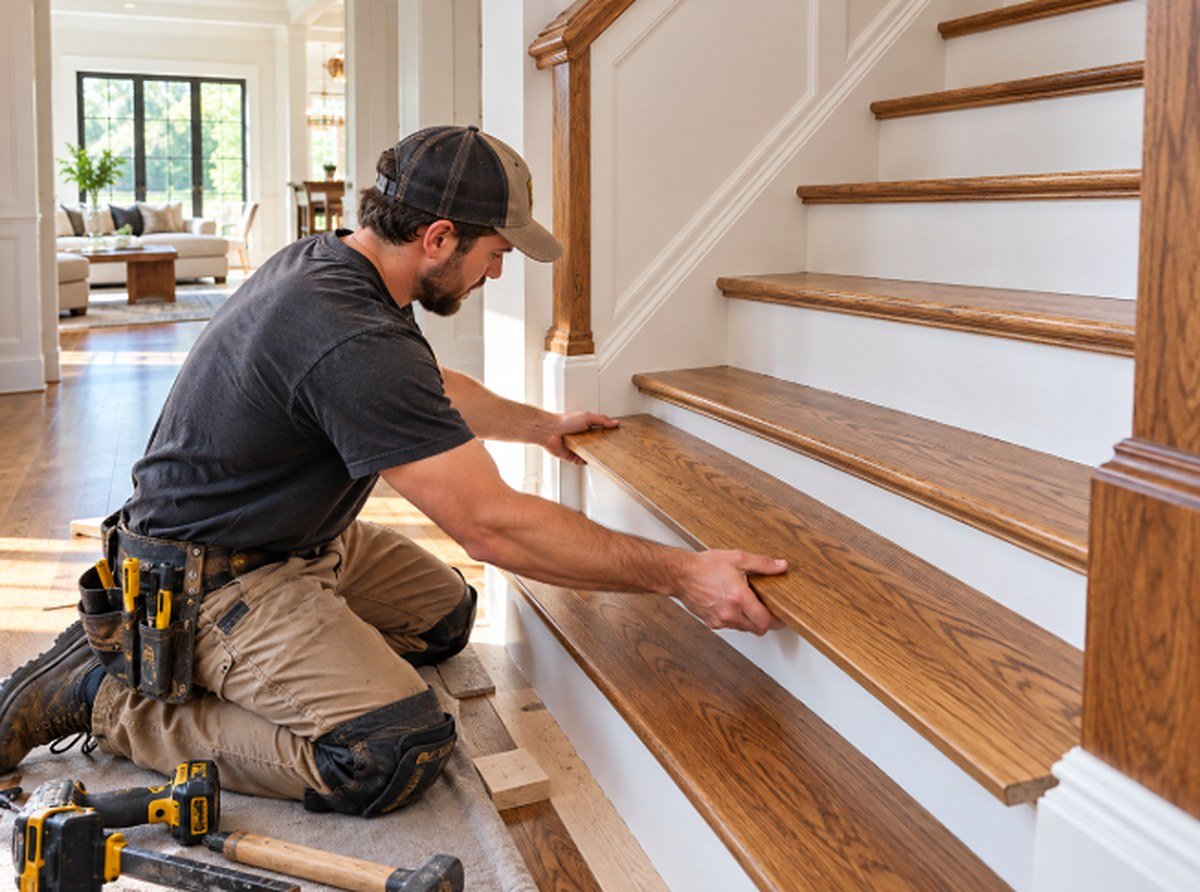
Installer fitting a new oak hardwood stair tread above white risers

Stair Components

Treads, Risers, Nosing, and Landings

01

Wood Stair Treads

Treads are the horizontal surfaces people step on, made from solid hardwood or other approved wood flooring materials depending on the staircase design. Popular options include:

  • White oak
  • Red oak
  • Maple
  • Walnut
  • Hickory
  • Custom-stained

Treads may be finished naturally or stained to match nearby flooring.

02

Stair Riser Installation

Risers are the vertical sections between each tread, finished in matching wood, painted material, or a contrasting finish.

Popular designs include hardwood treads with white painted risers, fully stained wood stairs, or coordinated treads and risers. The riser style has a major influence on the look of the staircase.

03

Stair Nosing Installation

Nosing forms the finished edge at the front of each tread, protecting the edge and creating a clean transition to the riser.

Profiles include rounded, square-edge, flush, and modern low-profile designs. Proper nosing installation matters for both appearance and stair safety. See trim & finishing.

04

Hardwood Stair Landings

Landings connect flights of stairs or transition into hallways and rooms, and often see high foot traffic. Hardwood on the landing creates a continuous design, installed securely and coordinated with the stair direction.

Herringbone, borders, or other decorative layouts can make larger landings more distinctive.

Stair Conversions & Tread Replacement

Upgrade Carpet or Laminate Stairs to Real Hardwood

01

Carpet to Hardwood Stair Conversion

A popular remodel. Carpet and padding are removed, the staircase is inspected, and staples, tack strips, and adhesive are cleared. New hardwood treads are installed over the structure, or the original steps are prepared further as needed.

02

Laminate to Hardwood Stair Conversion

Laminate is removed and the stair structure is checked for damage or uneven surfaces. New treads, risers, and nosing create a more natural, durable look that coordinates the staircase with hardwood floors on surrounding levels.

03

Stair Tread Replacement

Treads damaged by traffic, impact, water, or wear can often be replaced individually, matching dimensions, species, grain, and finish. If many treads are damaged, full staircase replacement gives a more consistent result.

Stair Refinishing, Sanding & Staining

Restore Your Existing Staircase Instead of Replacing It

Hardwood Stair Refinishing

Existing hardwood stairs can often be refinished instead of replaced, with sanding, stain removal, color changes, minor repairs, and a new protective finish. It's a great option when the structure is solid but the surface is scratched, worn, faded, or outdated. Stairs have edges, corners, and details, so they require more handwork than a flat floor.

Stair Sanding

Sanding removes worn finish, surface scratches, and old stain. A combination of sanding equipment and hand tools reaches the edges and tight corners, preparing the wood for new stain or finish while preserving the shape of the tread edges.

Stair Staining

Treads can be stained to coordinate with the rest of your hardwood flooring. Popular options include:

  • Natural oak
  • Light brown
  • Medium brown
  • Walnut
  • Dark brown
  • Espresso
  • Gray
  • Custom blends

Testing stain directly on the stair wood helps produce a closer match.

Stair Finish Options

Stairs can be finished in matte, satin, semi-gloss, or other approved flooring finishes. Lower-sheen finishes are popular for a more natural look that makes minor marks less noticeable, and the finish is chosen with traffic and maintenance in mind. See finish options.

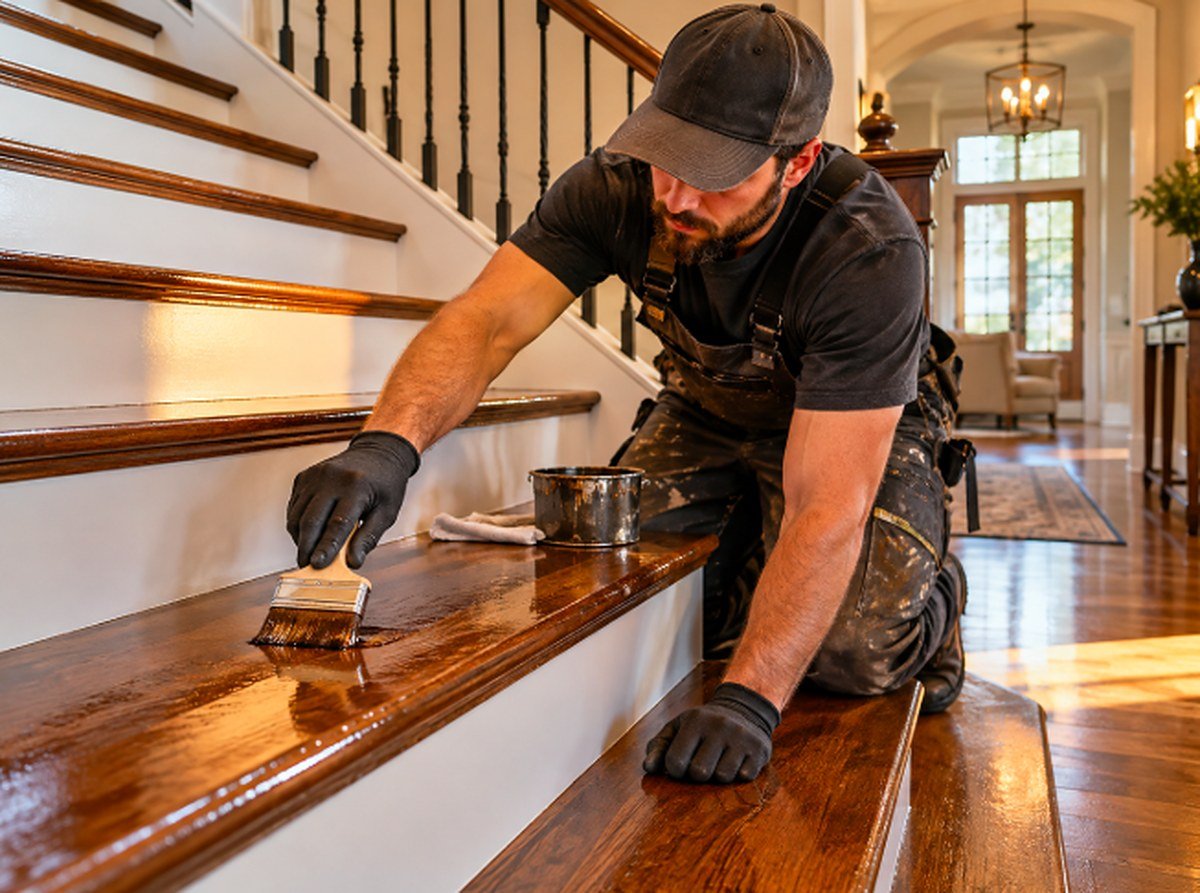
Craftsman applying stain and finish to hardwood stair treads

Matching Stairs to Hardwood Floors

One Consistent Look From Floor to Floor

Matching Your Staircase and Floors

Matching the staircase to the main flooring creates a consistent look throughout the property. Important details include:

  • Wood species
  • Stain color
  • Finish sheen
  • Grain pattern
  • Tread thickness
  • Nosing profile
  • Landing flooring

Even with the same species, stairs and floors can look slightly different because of lighting, grain, and age, so sample testing helps improve the match.

Staircase and Hallway Flooring

When stairs connect directly to a hardwood hallway, the flooring direction, landing layout, nosing, and stain should all work together, making the staircase feel like a natural extension of the upper and lower floors.

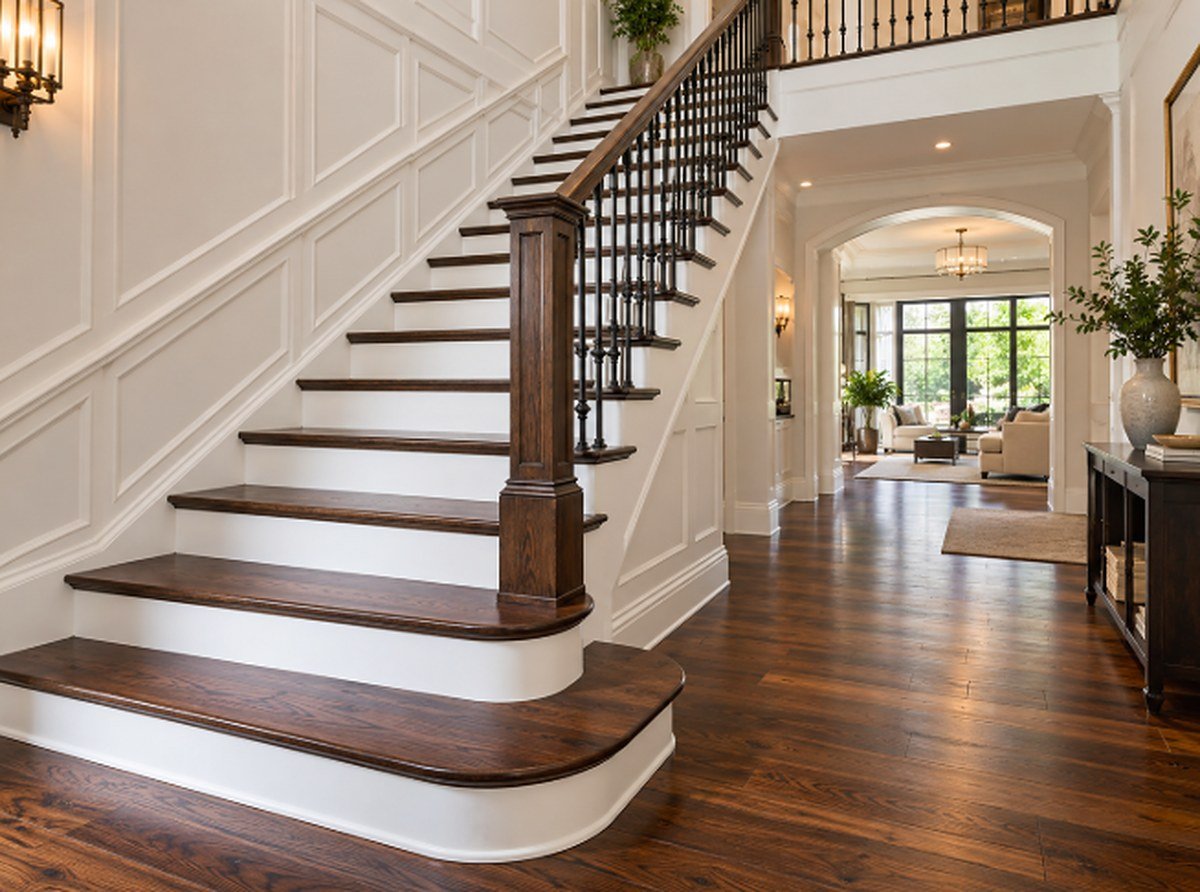
Staircase with dark stained hardwood treads matching the hallway hardwood floor

Wood Species for Hardwood Stairs

White Oak, Red Oak, Walnut, Maple, Hickory, and Engineered

White Oak Stair Flooring

One of the most popular choices for modern stairs. Its neutral tone works with light stains, medium browns, and darker finishes.

It complements modern, transitional, coastal, Scandinavian, and luxury interiors, especially with natural matte finishes.

Red Oak Stair Flooring

A classic stair material with visible grain and warm undertones, finished naturally or stained in many colors.

Works well in traditional and transitional homes and can often be matched to older hardwood floors in the property.

Walnut Stair Flooring

Walnut creates a rich, upscale look, and its naturally dark color makes the staircase a design feature.

Pair walnut treads with matching or painted risers; natural or satin finishes highlight the grain.

Maple Stair Flooring

Maple treads offer a smoother, lighter appearance often used in modern and contemporary interiors.

Because maple stains differently than oak, lighter or natural finishes are commonly selected.

Hickory Stair Flooring

Strong grain and natural color variation create a rustic or highly distinctive staircase.

Hickory is a relatively hard species, making it suitable for stairs with significant traffic.

Engineered Wood on Stairs

Some engineered flooring systems include matching stair noses, treads, or pieces designed to coordinate with the main floor.

The correct stair components are used rather than adapting standard planks in ways the manufacturer didn't intend.

Custom & Architectural Staircases

Custom, Floating, Open-Riser, and Closed-Riser Designs

01

Custom Staircases

Custom hardwood stairs allow more flexibility in material, color, tread design, and decorative details, such as:

  • Wide treads
  • Thick treads
  • Floating-style stairs
  • Open risers
  • Closed risers
  • Contrasting risers
  • Custom nosing
  • Decorative landings
  • Mixed wood species
  • Special stain colors

The design considers both appearance and safe stair dimensions.

02

Floating Stair Designs

Floating stairs use open designs where treads appear to have limited visible support, creating a clean, contemporary look with wood treads.

These systems require careful structural planning to meet applicable building requirements, with finishes coordinated to surrounding floors, railings, and interior elements.

03

Open-Riser Hardwood Stairs

Open-riser stairs have visible space between each tread instead of a solid riser, common in modern and architectural interiors.

Treads can be seen from above and below, so they become a major visual element and precise finishing is especially important.

04

Closed-Riser Hardwood Stairs

Closed-riser stairs use a solid vertical surface between each tread and are one of the most common residential styles.

Risers can be stained to match the treads or painted for contrast; white risers with natural oak treads are a popular combination.

Hardwood Stairs for Every Home Style

Modern, Traditional, and Luxury Staircases

01

Hardwood Stairs for Modern Homes

Modern stair designs often use:

  • White oak
  • Natural finishes
  • Wide treads
  • Square edges
  • Open risers
  • Black or metal railings
  • Minimal trim

The goal is a clean, architectural appearance.

02

Hardwood Stairs for Traditional Homes

Traditional staircases may use:

  • Red oak
  • Warm stains
  • Detailed nosing
  • Wood railings
  • Closed risers
  • Decorative trim
  • Newel posts

Flooring and stairs can be stained together for a unified look.

03

Hardwood Stairs for Luxury Homes

Luxury projects may use walnut, premium white oak, thick treads, custom stain colors, decorative landings, and specialty rail systems.

The staircase becomes a central feature connecting multiple levels, with careful attention to grain, color, transitions, and finishing details.

Hardwood Stair Repair

Squeaks, Cracked Treads, Water Damage, and Worn Finishes

01

Hardwood Stair Repair

Stairs can develop scratches, cracks, squeaks, loose treads, damaged nosing, or worn finishes. Minor surface problems may be repaired or refinished, while structural movement or broken treads may need component replacement.

02

Squeaky Stair Repair

Squeaks usually come from movement between treads, risers, fasteners, and the supporting structure. We find the source, then secure loose components or correct gaps, sometimes working from underneath the staircase.

03

Cracked Stair Tread Repair

Stairs carry concentrated weight and daily use, so cracked treads are evaluated carefully. Small cosmetic cracks may be repaired, while structurally damaged treads are replaced with ones matching the existing dimensions and material.

04

Stair Water Damage Repair

Water can affect treads, risers, landings, and trim. The leak or moisture source is fixed first, then damaged components are dried, refinished, or replaced depending on the extent of the problem.

Residential & Commercial Stair Flooring

Every Staircase Evaluated Individually

01

Residential Stair Flooring

We install and restore hardwood stairs in many types of residential properties:

  • Single-family homes
  • Condos
  • Townhouses
  • Older homes
  • Luxury homes
  • New construction
  • Remodeling projects

Each staircase is evaluated individually because dimensions, structure, and existing materials vary.

02

Commercial Hardwood Stairs

Hardwood stairs can also be used in offices, boutiques, hospitality spaces, showrooms, and other commercial interiors.

Commercial stair projects consider foot traffic, finish durability, safety requirements, and maintenance needs.

Stair Flooring Installation Process

A typical stair flooring project may include the following steps. The exact process depends on the staircase and selected materials.

  1. 01Inspecting the existing staircase
  2. 02Removing carpet or old materials
  3. 03Repairing the underlying structure
  4. 04Measuring each tread and riser
  5. 05Preparing the stair surfaces
  6. 06Cutting new components
  7. 07Installing treads and risers
  8. 08Installing stair nosing
  9. 09Completing landings and transitions
  10. 10Sanding and staining when required
  11. 11Applying protective finish
  12. 12Final inspection

Hardwood Stair Flooring FAQs

Answers to Common Staircase Questions

1.

Can you replace carpet on stairs with hardwood?

Yes, carpet-to-hardwood stair conversions are one of our most popular projects. We remove the carpet, padding, staples, and tack strips, inspect the staircase structure, and then install new hardwood treads, risers, and nosing. Each step is measured individually because stair dimensions often vary. The new stairs can be stained to match your existing floors for a seamless look.

2.

Can my existing wood stairs be refinished instead of replaced?

Often, yes. If the staircase structure is solid and the treads aren't badly cracked or damaged, refinishing is a great option. We sand away the old finish and scratches using equipment and hand tools, make minor repairs, apply your choice of stain, and finish with a protective coat. It usually costs less than replacement and can completely update the look.

3.

Can you match my stairs to my hardwood floors?

Yes. We match the wood species, stain color, finish sheen, grain, tread thickness, and nosing profile as closely as possible, and test stain samples directly on the stair wood. Because lighting and age affect how wood looks, stairs and floors may appear slightly different even with the same species, so testing is the best way to get a close match.

4.

How long does a hardwood stair installation take?

A typical staircase takes about two to four days, depending on the number of steps, whether carpet or old material needs removing, any structural repairs, and whether the treads are site-finished with stain. Prefinished treads usually go faster. Stain and finish coats need drying time, so we'll plan access to upper floors with you before the project begins.

5.

What is the most popular stair style right now?

In Los Angeles homes, natural or light white oak treads with white painted risers are especially popular, often paired with black metal balusters for a clean, modern look. Warm and dark stained treads remain classic for traditional homes, while open-riser and floating stairs are popular in modern architecture. We can help you choose a style that matches your floors and home.

Upgrade Your Staircase With Hardwood

A Strong Connection Between Every Level

A hardwood staircase can create a strong visual connection between the different levels of your home. Whether you are replacing carpeted stairs, refinishing existing wood, installing new treads, or creating a custom staircase, careful workmanship is important for both appearance and long-term performance.

Contact us to discuss hardwood stair materials, stain options, tread styles, nosing, landings, and matching your staircase to the surrounding wood flooring.

Book Service

Get a Free Estimate for Your Wood Flooring Project